Training Course on Traffic Impact Analysis
Training Course on Traffic Impact Analysis equips participants with the advanced tools and techniques required to assess and predict the effects of proposed developments on local transportation networks.
Skills Covered
Course Overview
Training Course on Traffic Impact Analysis
Introduction
Urban development and infrastructure growth are deeply tied to transportation planning. Training Course on Traffic Impact Analysis equips participants with the advanced tools and techniques required to assess and predict the effects of proposed developments on local transportation networks. Using cutting-edge data analytics, transport simulation software, and policy frameworks, learners will develop actionable insights into how traffic impacts can be managed to minimize congestion and maximize efficiency.
This course blends urban planning, traffic engineering, and smart mobility solutions, drawing from real-world case studies. With increasing focus on sustainable urban development, smart cities, and transportation modeling, Traffic Impact Analysis is a critical skill for professionals seeking to influence infrastructure decisions and policy formation in the public and private sectors.
Course Duration
5 days
Course Objectives
- Understand the fundamentals of Traffic Impact Analysis (TIA).
- Analyze transportation demand models using real-world data.
- Apply smart traffic management techniques for congestion reduction.
- Utilize GIS and spatial data in impact assessment.
- Interpret site development proposals from a transportation standpoint.
- Conduct intersection capacity analysis and signal optimization.
- Model multi-modal transportation impacts using advanced software.
- Identify policy implications of traffic impacts on urban planning.
- Integrate sustainable mobility solutions into TIA reports.
- Use simulation software tools (e.g., Synchro, VISSIM) effectively.
- Produce professional TIA reports for stakeholders and planning boards.
- Evaluate mitigation strategies and propose cost-effective alternatives.
- Assess the role of autonomous vehicles and emerging tech in future TIA.
Organizational Benefits
- Enhanced decision-making for urban planning and infrastructure investment.
- Improved compliance with transportation regulations and zoning laws.
- Reduced congestion and improved road safety through predictive analysis.
- Capability to manage stakeholder interests using data-driven reports.
- Competitive advantage through adoption of smart mobility strategies.
- Strengthened sustainability credentials via eco-friendly traffic planning.
Target Participants
- Urban Planners
- Transportation Engineers
- Civil Engineers
- Environmental Impact Analysts
- Municipal Government Officials
- Infrastructure Developers
- Real Estate Planners
- Smart City Consultants
Course Outline
Module 1: Introduction to Traffic Impact Analysis
- Definition and significance of TIA
- Legal and policy context
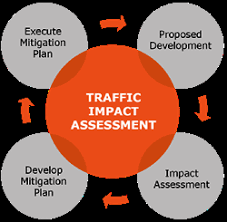
- Workflow of a typical TIA
- Stakeholder roles and responsibilities
- Case Study: TIA for Nairobi's Westlands Business District
Module 2: Data Collection & Traffic Surveys
- Manual and automated data collection techniques
- Peak hour traffic analysis
- Use of drones and AI in traffic surveys
- Mapping origin-destination patterns
- Case Study: Data collection for a mixed-use development in Mombasa
Module 3: Trip Generation & Distribution
- ITE Trip Generation Manual overview
- Land-use impact on trip generation
- Predictive models for trip distribution
- Socioeconomic factors influencing traffic
- Case Study: Shopping mall expansion in Kisumu
Module 4: Traffic Assignment & Modeling
- Introduction to traffic assignment models
- Static vs dynamic assignment
- Software: Synchro, VISSIM, Aimsun
- Calibration and validation of models
- Case Study: Traffic simulation for Nairobi Expressway access points
Module 5: Intersection & Roadway Analysis
- Capacity analysis methods (HCM)
- Roundabout vs signalized intersections
- Microsimulation analysis
- Delay and level-of-service metrics
- Case Study: Signal optimization in Eldoret CBD
Module 6: Environmental & Socioeconomic Impact
- Emissions analysis and air quality considerations
- Noise pollution studies
- Public transport integration
- Equity and accessibility evaluations
- Case Study: BRT impact analysis in Nairobi
Module 7: Report Writing & Communication
- Structure of a professional TIA report
- Data visualization best practices
- Executive summaries for non-technical audiences
- Public consultation techniques
- Case Study: Presenting TIA to the Nakuru County Assembly
Module 8: Mitigation Strategies & Smart Mobility
- Policy-based mitigation (e.g., impact fees)
- Engineering solutions (e.g., additional lanes)
- Tech-based solutions (ITS, adaptive signals)
- Future-ready planning (EVs, AVs, MaaS)
- Case Study: Smart mobility solutions in Kigali, Rwanda
Training Methodology
- Instructor-led virtual and physical sessions
- Hands-on case study workshops
- Group discussions and brainstorming
- Simulation software demonstrations
- Assessments via quizzes and project presentations
Register as a group from 3 participants for a Discount
Send us an email: info@datastatresearch.org or call +254724527104
Certification
Upon successful completion of this training, participants will be issued with a globally- recognized certificate.
Tailor-Made Course
We also offer tailor-made courses based on your needs.
Key Notes
a. The participant must be conversant with English.
b. Upon completion of training the participant will be issued with an Authorized Training Certificate
c. Course duration is flexible and the contents can be modified to fit any number of days.
d. The course fee includes facilitation training materials, 2 coffee breaks, buffet lunch and A Certificate upon successful completion of Training.
e. One-year post-training support Consultation and Coaching provided after the course.
f. Payment should be done at least a week before commence of the training, to DATASTAT CONSULTANCY LTD account, as indicated in the invoice so as to enable us prepare better for you.