Using Drones for Traffic Surveys and Incident Recon Training Course
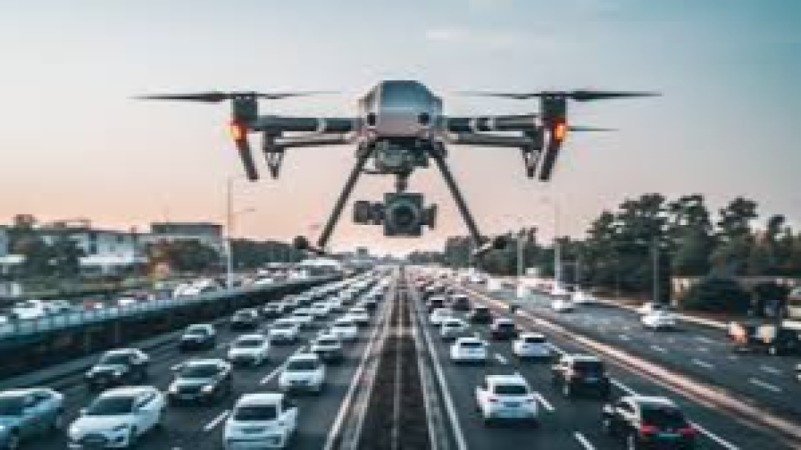
Using Drones for Traffic Surveys and Incident Recon Training Course is designed to empower traffic engineers, urban planners, law enforcement agencies, and emergency responders with practical skills to leverage drones for traffic surveys, congestion analysis, and incident reconnaissance.
Skills Covered
Course Overview
Using Drones for Traffic Surveys and Incident Recon Training Course
Introduction
The rapid evolution of unmanned aerial systems (UAS) has revolutionized traffic monitoring, urban mobility analysis, and incident response management. Drones equipped with high-resolution cameras, LiDAR sensors, and AI-powered analytics are now at the forefront of traffic data acquisition, providing real-time insights with unparalleled accuracy. Using Drones for Traffic Surveys and Incident Recon Training Course is designed to empower traffic engineers, urban planners, law enforcement agencies, and emergency responders with practical skills to leverage drones for traffic surveys, congestion analysis, and incident reconnaissance. Participants will gain hands-on experience in flight planning, data collection, and advanced analytics, ensuring they can optimize traffic management, reduce response times, and enhance public safety.
With urbanization accelerating and traffic incidents increasingly impacting economic productivity, the ability to gather timely and precise traffic data has become a strategic necessity. This training integrates cutting-edge drone technology with modern traffic management strategies, emphasizing operational safety, regulatory compliance, and data-driven decision-making. Participants will learn to transform raw aerial data into actionable insights, conduct comprehensive traffic assessments, and support emergency response operations effectively. By the end of this course, attendees will possess the skills to implement drone-based traffic monitoring solutions, improve incident detection, and enhance transportation planning with actionable intelligence.
Course Duration
5 days
Course Objectives
- Master drone flight operations for traffic survey applications.
- Conduct real-time traffic monitoring and congestion analysis using UAVs.
- Apply AI and machine learning for automated traffic data interpretation.
- Integrate aerial imagery with Geographic Information Systems (GIS).
- Implement incident reconnaissance and rapid situational assessment.
- Understand airspace regulations, safety protocols, and compliance.
- Optimize traffic management strategies using drone-collected data.
- Utilize LiDAR, thermal, and high-resolution imaging for traffic studies.
- Analyze vehicle counts, flow patterns, and congestion hotspots.
- Develop operational protocols for emergency traffic incident response.
- Create actionable reports and dashboards from aerial datasets.
- Conduct cost-benefit analysis of drone-based traffic monitoring.
- Enhance public safety and reduce response time during traffic incidents.
Target Audience
- Traffic engineers and transportation planners
- Urban mobility analysts
- Law enforcement officers and emergency responders
- City infrastructure managers
- Road safety auditors
- Drone operators and UAV pilots
- Government transport authorities
- Smart city solution developers
Course Modules
Module 1: Introduction to Drones in Traffic Management
- Evolution of drone technology for traffic applications
- Drone types, sensors, and payloads for traffic surveys
- Regulatory framework and airspace safety
- Operational planning and risk assessment
- Case Study: Urban traffic monitoring in Singapore
Module 2: Flight Operations and Safety Protocols
- Pre-flight planning and checklist procedures
- Autonomous vs. manual drone operations
- Collision avoidance and emergency protocols
- Safety risk assessment in urban traffic environments
- Case Study: Incident recon during multi-lane highway accidents
Module 3: Data Acquisition and Traffic Survey Techniques
- Aerial imaging for traffic volume and flow analysis
- Drone-mounted LiDAR and thermal sensors
- Real-time traffic monitoring dashboards
- Vehicle classification and congestion detection
- Case Study: Highway congestion analysis in Los Angeles
Module 4: Incident Reconnaissance and Emergency Response
- Rapid situational assessment using drones
- Accident scene documentation and reporting
- Coordinating with first responders
- Crowd management and evacuation monitoring
- Case Study: Drone deployment after a multi-vehicle collision
Module 5: Data Processing and Analytics
- Image stitching and georeferencing
- Automated vehicle counting using AI
- Traffic pattern and hotspot analysis
- Integrating drone data with GIS platforms
- Case Study: Smart city traffic management in Dubai
Module 6: Traffic Simulation and Predictive Analysis
- Using drone data for predictive traffic modeling
- Congestion forecasting using AI and machine learning
- Scenario-based traffic flow simulations
- Optimizing signal timings and route planning
- Case Study: Predictive congestion analysis in London
Module 7: Reporting, Dashboards, and Decision Support
- Creating actionable traffic reports
- Dashboard visualization for stakeholders
- KPIs for traffic management using drone data
- Communicating insights to authorities and public
- Case Study: Municipal traffic operations dashboard implementation
Module 8: Emerging Trends and Future Applications
- Swarm drones and autonomous traffic monitoring
- Integration with IoT and smart city initiatives
- Environmental impact and sustainable urban mobility
- Drone fleet management strategies
- Case Study: Drone-assisted traffic control in smart cities
Training Methodology
This course employs a participatory and hands-on approach to ensure practical learning, including:
- Interactive lectures and presentations.
- Group discussions and brainstorming sessions.
- Hands-on exercises using real-world datasets.
- Role-playing and scenario-based simulations.
- Analysis of case studies to bridge theory and practice.
- Peer-to-peer learning and networking.
- Expert-led Q&A sessions.
- Continuous feedback and personalized guidance.
Register as a group from 3 participants for a Discount
Send us an email: info@datastatresearch.org or call +254724527104
Certification
Upon successful completion of this training, participants will be issued with a globally- recognized certificate.
Tailor-Made Course
We also offer tailor-made courses based on your needs.
Key Notes
a. The participant must be conversant with English.
b. Upon completion of training the participant will be issued with an Authorized Training Certificate
c. Course duration is flexible and the contents can be modified to fit any number of days.
d. The course fee includes facilitation training materials, 2 coffee breaks, buffet lunch and A Certificate upon successful completion of Training.
e. One-year post-training support Consultation and Coaching provided after the course.
f. Payment should be done at least a week before commence of the training, to DATASTAT CONSULTANCY LTD account, as indicated in the invoice so as to enable us prepare better for you.