Training Course on Trade in Services Negotiations and Implementation
Training Course on Trade in Services Negotiations and Implementation equips participants with the essential knowledge and practical skills needed to navigate the complexities of international trade agreements and successfully implement service sector liberalization.
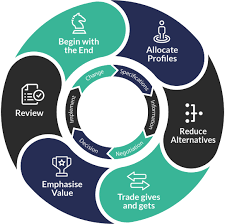
Course Overview
Training Course on Trade in Services Negotiations and Implementation
Introduction
In today's interconnected global economy, mastering trade in services is crucial for sustainable growth and competitive advantage. This comprehensive training course equips participants with the essential knowledge and practical skills needed to navigate the complexities of international trade agreements and successfully implement service sector liberalization. We delve into the intricacies of WTO General Agreement on Trade in Services (GATS), bilateral and regional trade deals, and the evolving landscape of digital trade. Through expert-led sessions and real-world case studies, participants will gain a deep understanding of market access, national treatment, and regulatory frameworks, enabling them to effectively contribute to their organizations' trade strategies.
This program focuses on building practical expertise in negotiation techniques, regulatory compliance, and policy analysis. Participants will learn to identify and address trade barriers, leverage preferential trade agreements, and develop strategies for export promotion in the services sector. We emphasize the importance of stakeholder engagement, capacity building, and sustainable development in the context of trade in services, ensuring that participants are well-prepared to drive positive outcomes for their organizations and contribute to the global trade ecosystem.
Course Duration
10 days
Course Objectives
- Master the fundamentals of trade in services agreements and their impact on global markets.
- Analyze the WTO GATS and its core principles, including most-favored-nation (MFN) treatment.
- Develop proficiency in market access negotiations and understand the role of specific commitments.
- Evaluate the implications of domestic regulation on service sector trade.
- Identify and address non-tariff barriers affecting service exports and imports.
- Understand the dynamics of digital trade and its regulatory challenges.
- Apply negotiation strategies to achieve favorable outcomes in trade discussions.
- Implement regulatory reforms to enhance competitiveness in the services sector.
- Leverage preferential trade agreements for strategic market expansion.
- Conduct trade policy analysis and assess the impact of trade liberalization.
- Build capacity for stakeholder engagement and effective communication in trade negotiations.
- Explore the intersection of sustainable development and trade in services.
- Develop strategies for export promotion and market diversification in the services sector.
Organizational Benefits
- Enhanced capacity to navigate international trade agreements.
- Improved market access and export opportunities for service providers.
- Reduced trade barriers and compliance costs.
- Strengthened negotiation skills for favorable trade outcomes.
- Increased competitiveness in the global services market.
Target Audience
- Government Trade Officials
- Policy Analysts
- Business Development Managers
- Legal Professionals
- International Trade Consultants
- Service Sector Exporters
- Investment Promotion Agencies
- Economic Development Specialists
Course Outline
- Introduction to Trade in Services:
- Overview of the global services economy.
- Key concepts and definitions.
- Importance of services in international trade.
- Historical development of trade in services agreements.
- The role of services in economic development.
- The WTO GATS Framework:
- Principles and objectives of the GATS.
- Structure and scope of the GATS agreement.
- Most-Favored-Nation (MFN) treatment.
- National Treatment obligations.
- Specific commitments and scheduling.
- Market Access and National Treatment:
- Understanding market access barriers.
- Analyzing national treatment provisions.
- Negotiating specific commitments.
- Identifying sectors for liberalization.
- Analyzing the impact of reservations.
- Regulatory Frameworks and Domestic Regulation:
- Impact of domestic regulation on trade in services.
- Licensing and qualification requirements.
- Standards and technical regulations.
- Transparency and due process.
- Best practices in regulatory reform.
- Non-Tariff Barriers (NTBs) in Services:
- Identifying and analyzing NTBs.
- Impact of NTBs on market access.
- Strategies for addressing NTBs.
- Role of regulatory cooperation.
- Case studies of NTB resolution.
- Digital Trade and E-commerce:
- Overview of digital trade and e-commerce.
- Regulatory challenges in the digital economy.
- Data flows and privacy concerns.
- Cross-border data regulations.
- Impact of digital trade on traditional services.
- Negotiation Techniques and Strategies:
- Principles of effective negotiation.
- Developing negotiation strategies.
- Analyzing negotiating positions.
- Building consensus and resolving disputes.
- Practical simulation exercises.
- Preferential Trade Agreements (PTAs):
- Understanding the role of PTAs in services trade.
- Analyzing PTA provisions related to services.
- Leveraging PTAs for market expansion.
- Comparing bilateral and regional agreements.
- Impact of PTAs on GATS.
- Trade Policy Analysis:
- Methods for analyzing trade policies.
- Assessing the impact of trade liberalization.
- Conducting economic impact assessments.
- Developing evidence-based policy recommendations.
- Analyzing trade data and statistics.
- Stakeholder Engagement and Communication:
- Identifying key stakeholders.
- Developing communication strategies.
- Building consensus and fostering collaboration.
- Managing stakeholder expectations.
- Effective public consultations.
- Sustainable Development and Trade in Services:
- Linking trade in services to sustainable development goals.
- Promoting environmentally sustainable services.
- Addressing social and economic impacts of trade.
- Integrating sustainability considerations into trade policies.
- The role of trade in achieving the 2030 agenda.
- Export Promotion and Market Diversification:
- Developing export strategies for services.
- Identifying target markets and opportunities.
- Utilizing trade promotion tools and resources.
- Building export capacity and competitiveness.
- Diversifying export markets and reducing risks.
- Implementation and Monitoring of Trade Agreements:
- Steps for implementing trade agreements.
- Monitoring and evaluating implementation.
- Addressing implementation challenges.
- Dispute settlement mechanisms.
- Ensuring compliance and enforcement.
- Sector-Specific Issues in Trade in Services:
- Analyzing trade issues in key service sectors (e.g., finance, telecom).
- Understanding sector-specific regulations.
- Identifying sector-specific trade barriers.
- Developing sector-specific trade strategies.
- Case studies of sector-specific trade negotiations.
- Future Trends and Emerging Issues:
- Emerging trends in global services trade.
- Impact of technological advancements.
- Future challenges and opportunities.
- The role of services in the post-pandemic economy.
- Preparing for future negotiations.
Training Methodology
- Interactive lectures and discussions.
- Case studies and real-world examples.
- Practical exercises and simulations.
- Group work and collaborative learning.
- Expert guest speakers and panel discussions.
Register as a group from 3 participants for a Discount
Send us an email: info@datastatresearch.org or call +254724527104
Certification
Upon successful completion of this training, participants will be issued with a globally- recognized certificate.
Tailor-Made Course
We also offer tailor-made courses based on your needs.
Key Notes
a. The participant must be conversant with English.
b. Upon completion of training the participant will be issued with an Authorized Training Certificate
c. Course duration is flexible and the contents can be modified to fit any number of days.
d. The course fee includes facilitation training materials, 2 coffee breaks, buffet lunch and A Certificate upon successful completion of Training.
e. One-year post-training support Consultation and Coaching provided after the course.
f. Payment should be done at least a week before commence of the training, to DATASTAT CONSULTANCY LTD account, as indicated in the invoice so as to enable us prepare better for you.