Training Course on Optimizing Capital Structure and Shareholder Value
Training Course on Optimizing Capital Structure and Shareholder Value emphasizes the latest corporate finance trends and valuation methodologies, moving beyond theoretical concepts to provide actionable insights for real-world application.
Skills Covered
Course Overview
Training Course on Optimizing Capital Structure and Shareholder Value
Introduction
In today's dynamic global marketplace, strategic financial management is paramount for sustainable growth and maximizing investor returns. A company's capital structure, the delicate balance of debt and equity financing, profoundly influences its cost of capital, financial risk profile, and ultimately, its shareholder wealth. This intensive training program delves into the intricate relationship between optimal capital structure decisions and the overarching goal of shareholder value creation, equipping finance professionals with advanced analytical tools and practical frameworks to navigate complex financial landscapes.
Training Course on Optimizing Capital Structure and Shareholder Value emphasizes the latest corporate finance trends and valuation methodologies, moving beyond theoretical concepts to provide actionable insights for real-world application. Participants will gain a deep understanding of how to assess various financing alternatives, mitigate financial distress, and align financing strategies with long-term corporate objectives. By mastering the art and science of capital structure optimization, organizations can unlock significant competitive advantages, enhance financial stability, and drive superior investor returns in an increasingly volatile economic environment.
Course Duration
5 days
Course Objectives
Upon completion of this course, participants will be able to:
- Critically evaluate foundational and contemporary capital structure theories and their practical implications.
- Develop strategies to effectively reduce the Weighted Average Cost of Capital (WACC), a key driver of firm value.
- Accurately quantify and manage financial leverage risk and its impact on profitability and solvency.
- Determine the optimal debt-equity ratio for various business models and industry contexts.
- Compare and contrast diverse financing instruments and their suitability.
- Implement strategies directly aimed at maximizing shareholder value through effective capital allocation.
- Apply advanced valuation techniques (e.g., DCF, multiples) to assess the impact of capital structure decisions on firm value.
- Understand the interplay between dividend policy and capital structure in influencing shareholder returns.
- Identify early warning signs of financial distress and formulate proactive restructuring strategies.
- Integrate Environmental, Social, and Governance (ESG) factors into capital structure decisions for sustainable finance.
- Explore the application of AI-driven financial analytics for optimizing capital structure.
- Design capital structures that minimize agency costs and align management and shareholder interests.
- Develop robust capital structures that enhance corporate resilience and adaptability in volatile markets.
Organizational Benefits
- Lower borrowing costs and improved equity valuations lead to a more efficient cost of financing.
- A balanced capital structure minimizes the risk of bankruptcy and improves creditworthiness.
- Direct positive impact on EPS, share price appreciation, and overall investor wealth.
- A strong financial profile attracts investors and lenders, facilitating future fundraising.
- Optimal financing provides the agility to seize growth opportunities and weather economic downturns.
- Efficient capital allocation allows for superior investment in R&D, market expansion, and operational efficiency.
- Demonstrates sound financial management, building trust with existing and potential investors.
- Strategic use of debt can lead to significant tax shield benefits, increasing after-tax profits.
Target Audience
- CFOs and Senior Finance Executives.
- Financial Analysts
- Investment Banker
- Treasury Professionals
- Corporate Development Managers
- Private Equity and Venture Capital Professionals
- Fund Managers and Investors.
- Business Owners and Entrepreneurs.
Course Outlie
Module 1: Foundations of Capital Structure and Value Creation
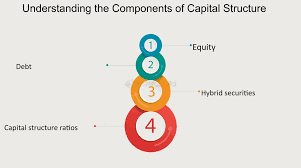
- Defining Capital Structure: Debt, Equity, and Hybrid Instruments.
- The Objective of the Firm: Shareholder Wealth Maximization.
- Understanding the Weighted Average Cost of Capital (WACC) and its components.
- Introduction to Capital Structure Theories: M&M Propositions, Trade-off Theory, Pecking Order Theory.
- The Link Between Capital Structure, Cost of Capital, and Firm Value.
- Case Study: Analyzing the evolution of Apple Inc.'s capital structure and its impact on market capitalization.
Module 2: Cost of Capital and Optimal Debt Levels
- Detailed Calculation of Cost of Equity (CAPM, Dividend Discount Model).
- Determining the Cost of Debt and the Impact of Tax Shields.
- Advanced WACC Calculation and Sensitivity Analysis.
- Identifying the Optimal Debt-Equity Mix to Minimize WACC.
- Practical Considerations for Debt Capacity and Covenants.
- Case Study: Evaluating a manufacturing company's optimal debt level based on its cash flow stability and industry benchmarks.
Module 3: Financial Leverage, Risk, and Return
- Operating Leverage vs. Financial Leverage: Understanding their interplay.
- Impact of Leverage on Earnings Per Share (EPS) and Return on Equity (ROE).
- Quantifying Business Risk and Financial Risk.
- Measuring and Managing Default Risk and Bankruptcy Costs.
- The Role of Credit Ratings in Capital Structure Decisions.
- Case Study: Assessing the financial risk profile of a highly leveraged retail chain during an economic downturn.
Module 4: Equity Financing Strategies and Shareholder Dilution
- Sources of Equity Capital: Common Stock, Preferred Stock, Retained Earnings.
- Initial Public Offerings (IPOs) and Seasoned Equity Offerings (SEOs).
- Understanding Shareholder Dilution and its implications.
- Stock Repurchases and Dividend Policies: Impact on Shareholder Value.
- Employee Stock Option Plans (ESOPs) and their effects on capital structure.
- Case Study: Examining a tech startup's decision between private equity funding and an IPO, considering valuation and control.
Module 5: Debt Financing Instruments and Markets
- Types of Debt: Bank Loans, Corporate Bonds, Convertible Debt.
- Understanding Debt Covenants and their impact on flexibility.
- The Role of Debt Markets (Bond Markets, Syndicated Loans).
- Structured Finance and Securitization for specific assets.
- Global Debt Markets and Cross-Border Financing.
- Case Study: Analyzing a multinational corporation's choice between issuing Eurobonds and syndicated bank loans for international expansion.
Module 6: Advanced Capital Structure Topics and Valuation
- Capital Structure in Mergers and Acquisitions (M&A).
- Leveraged Buyouts (LBOs) and their unique financing structures.
- Valuation of Companies with Complex Capital Structures.
- Adjusted Present Value (APV) vs. WACC Method for Valuation.
- The Impact of Corporate Governance on Capital Structure Decisions.
- Case Study: Valuing a target company in an LBO scenario, focusing on the debt financing implications and equity returns.
Module 7: Emerging Trends in Capital Structure and Finance
- ESG-Linked Financing and Green Bonds: Sustainable Capital.
- The Rise of Hybrid Securities and Innovative Financing Solutions.
- Impact of Digital Transformation and FinTech on Capital Markets.
- Blockchain and Decentralized Finance (DeFi) in Corporate Funding.
- Integrating AI and Big Data Analytics for Capital Structure Optimization.
- Case Study: Exploring how a renewable energy company can leverage green bonds to finance new projects and attract socially responsible investors.
Module 8: Strategic Implementation and Case Studies in Shareholder Value
- Developing a Comprehensive Capital Structure Policy.
- Aligning Capital Structure with Corporate Strategy and Growth Objectives.
- Measuring and Communicating Shareholder Value Creation to Investors.
- Scenario Planning and Stress Testing Capital Structure under various conditions.
- Real-world Application of Capital Structure Optimization: Best Practices.
- Case Study: A deep dive into how a struggling automotive company successfully restructured its debt and equity to regain financial health and restore investor confidence.
Training Methodology
This training course employs a highly interactive and practical methodology designed to foster deep understanding and immediate application. The approach combines:
- Expert-Led Lectures: Clear and concise explanations of core concepts and theories by industry practitioners.
- Interactive Discussions: Encouraging participant engagement and sharing of diverse perspectives.
- Real-World Case Studies: In-depth analysis of actual company scenarios to apply learned concepts and problem-solving skills.
- Practical Exercises and Simulations: Hands-on activities to reinforce understanding and develop practical abilities in financial modeling and analysis.
- Group Work and Presentations: Collaborative learning to foster teamwork and communication skills.
- Q&A Sessions: Dedicated time for participants to address specific queries and challenges.
- Financial Modeling Templates: Provision of practical templates for participants to use in their work.
Register as a group from 3 participants for a Discount
Send us an email: info@datastatresearch.org or call +254724527104
Certification
Upon successful completion of this training, participants will be issued with a globally- recognized certificate.
Tailor-Made Course
We also offer tailor-made courses based on your needs.
Key Notes
a. The participant must be conversant with English.
b. Upon completion of training the participant will be issued with an Authorized Training Certificate
c. Course duration is flexible and the contents can be modified to fit any number of days.
d. The course fee includes facilitation training materials, 2 coffee breaks, buffet lunch and A Certificate upon successful completion of Training.
e. One-year post-training support Consultation and Coaching provided after the course.
f. Payment should be done at least a week before commence of the training, to DATASTAT CONSULTANCY LTD account, as indicated in the invoice so as to enable us prepare better for you.