Training Course on Feasibility Studies and Business Planning
Training Course on Feasibility Studies and Business Planning equips individuals and organizations with the essential knowledge and practical skills to navigate uncertainty and make informed decisions.
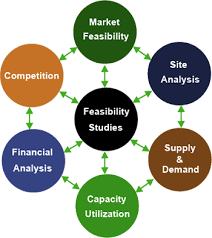
Course Overview
Training Course on Feasibility Studies and Business Planning
Introduction
In today's dynamic and competitive business landscape, the ability to strategically plan and meticulously evaluate potential ventures is paramount. Training Course on Feasibility Studies and Business Planning equips individuals and organizations with the essential knowledge and practical skills to navigate uncertainty and make informed decisions. By mastering the art of market analysis, financial forecasting, and risk assessment, participants will gain a significant competitive advantage, enabling them to identify viable opportunities and develop robust strategies for sustainable growth. This program delves into the core principles of crafting compelling business plans that attract investment, secure resources, and guide operational execution. Through interactive sessions and real-world case studies, learners will develop the confidence and expertise to transform innovative ideas into successful realities, driving organizational growth and fostering a culture of strategic thinking.
This intensive course provides a structured framework for understanding the interconnectedness of feasibility analysis and strategic planning. Participants will learn how to conduct thorough industry research, analyze competitive landscapes, and accurately project financial viability. Furthermore, the training emphasizes the importance of developing clear and actionable business models, defining target markets, and formulating effective marketing strategies. By focusing on practical application and utilizing industry-standard tools and techniques, this course empowers participants to become proficient in developing comprehensive feasibility reports and compelling business plans that serve as roadmaps for success in diverse sectors. Mastering these skills is crucial for entrepreneurs, business leaders, and anyone involved in driving strategic initiatives and ensuring long-term business sustainability.
Course Duration
10 days
Course Objectives
Upon completion of this training course, participants will be able to:
- Conduct comprehensive market research to identify opportunities and assess market demand.
- Perform thorough financial feasibility analysis, including cost-benefit analysis and break-even point calculations.
- Develop robust financial projections, including income statements, balance sheets, and cash flow statements.
- Analyze and mitigate potential business risks through effective risk management strategies.
- Craft compelling and investor-ready business plans with clear objectives and strategies.
- Define and analyze target market segments to tailor marketing and sales efforts effectively.
- Develop effective marketing and sales strategies to reach and engage the target audience.
- Formulate clear and achievable operational plans for efficient resource allocation and execution.
- Understand the legal and regulatory frameworks relevant to business operations and compliance.
- Evaluate the economic feasibility and societal impact of potential projects.
- Master techniques for presenting feasibility study findings and business plans to stakeholders.
- Utilize industry-standard tools and software for data analysis and business planning.
- Develop strategies for sustainable business growth and long-term value creation.
Organizational Benefits
- Equipping employees with the skills to conduct thorough feasibility studies leads to more informed and strategic investment decisions, reducing the risk of costly failures.
- A deeper understanding of business planning principles fosters a culture of proactive planning, enabling the organization to anticipate challenges and capitalize on opportunities.
- By providing a framework for evaluating new ideas and developing robust business plans, the course encourages innovation and supports sustainable growth initiatives.
- Well-developed feasibility studies and business plans are crucial for securing external funding and attracting investors who seek well-vetted opportunities.
- Effective business planning ensures that resources are allocated efficiently and aligned with strategic objectives, maximizing return on investment.
- By thoroughly evaluating the feasibility of projects before implementation, organizations can significantly increase their success rates and minimize wasted effort.
Target Audience
- Entrepreneurs and Start-up Founders.
- Business Development Managers.
- Project Managers.
- Financial Analysts.
- Strategic Planning Professionals.
- Corporate Managers and Executives.
- Consultants.
- Individuals Seeking Career Advancement.
Course Outline
Module 1: Introduction to Feasibility Studies and Business Planning
- Understanding the importance and scope of feasibility studies.
- The role of business planning in organizational success.
- Types of feasibility studies and their applications.
- The interconnectedness of feasibility analysis and business planning.
- Case Study: Analyzing a successful business that started with a thorough feasibility study.
Module 2: Market Research and Analysis
- Identifying target markets and understanding customer needs.
- Conducting effective primary and secondary market research.
- Analyzing market trends, size, and growth potential.
- Evaluating the competitive landscape and identifying competitive advantages.
- Case Study: Examining a company that successfully adapted its strategy based on market research findings.
Module 3: Technical and Operational Feasibility
- Assessing the technical requirements and resources needed for a project.
- Evaluating the operational aspects, including production, logistics, and infrastructure.
- Analyzing the feasibility of technology adoption and implementation.
- Developing an efficient operational plan and resource allocation strategy.
- Case Study: Analyzing the operational challenges and solutions of a manufacturing startup.
Module 4: Financial Feasibility Analysis - Part 1: Costing and Investment
- Identifying and categorizing different types of project costs.
- Estimating initial investment requirements and funding sources.
- Understanding depreciation methods and their impact on financial projections.
- Analyzing the cost structure and identifying areas for optimization.
- Case Study: Evaluating the cost analysis of a large-scale infrastructure project.
Module 5: Financial Feasibility Analysis - Part 2: Revenue and Profitability
- Developing realistic revenue projections based on market analysis.
- Calculating gross profit margin and understanding its significance.
- Analyzing operating expenses and their impact on profitability.
- Determining the break-even point and understanding its implications.
- Case Study: Analyzing the revenue model and profitability of a successful e-commerce business.
Module 6: Financial Feasibility Analysis - Part 3: Financial Projections
- Preparing projected income statements (profit and loss accounts).
- Developing projected balance sheets (statement of financial position).
- Creating projected cash flow statements (statement of cash flows).
- Understanding key financial ratios and their interpretation.
- Case Study: Examining the financial projections of a publicly traded company.
Module 7: Risk Assessment and Mitigation
- Identifying potential business risks and their likelihood and impact.
- Developing strategies for risk mitigation and contingency planning.
- Understanding different types of business risks (market, financial, operational, etc.).
- Implementing risk management frameworks and processes.
- Case Study: Analyzing how a company effectively managed a significant business risk.
Module 8: Introduction to Business Planning
- Understanding the purpose and benefits of a comprehensive business plan.
- Identifying the key components of a successful business plan.
- Tailoring the business plan to different audiences (investors, lenders, internal stakeholders).
- The importance of an executive summary and company description.
- Case Study: Reviewing the business plan of a well-known startup that secured significant funding.
Module 9: Developing the Marketing and Sales Plan
- Defining the target market and creating customer profiles.
- Developing effective marketing strategies and tactics (online and offline).
- Establishing sales processes and setting sales targets.
- Creating a marketing budget and measuring marketing effectiveness.
- Case Study: Analyzing the marketing strategy of a company with rapid customer acquisition.
Module 10: Developing the Operational Plan
- Defining the operational processes and workflow.
- Planning for production, service delivery, and quality control.
- Determining staffing requirements and organizational structure.
- Managing supply chains and inventory effectively.
- Case Study: Examining the operational efficiency strategies of a leading logistics company.
Module 11: Financial Planning and Funding Strategies
- Determining funding requirements and exploring different funding sources (debt, equity, grants).
- Developing a financial management plan and setting financial controls.
- Understanding valuation methods for early-stage businesses.
- Preparing financial forecasts for funding applications.
- Case Study: Analyzing the funding journey of a high-growth technology company.
Module 12: Legal and Regulatory Considerations
- Understanding the legal structures for businesses (sole proprietorship, partnership, corporation).
- Identifying relevant licenses, permits, and regulatory requirements.
- Understanding intellectual property rights (trademarks, patents, copyrights).
- Ensuring compliance with labor laws and other relevant regulations.
- Case Study: Examining the legal challenges faced by a startup in a highly regulated industry.
Module 13: Sustainability and Social Impact
- Integrating sustainability principles into business planning.
- Understanding the importance of corporate social responsibility (CSR).
- Measuring and reporting on social and environmental impact.
- Developing business models that create both economic and social value.
- Case Study: Analyzing a company with a strong commitment to sustainability and social impact.
Module 14: Presenting Your Feasibility Study and Business Plan
- Developing effective presentation skills for different audiences.
- Structuring and organizing the presentation content logically.
- Using visual aids and data effectively to communicate key findings.
- Handling questions and addressing concerns from stakeholders.
- Case Study: Analyzing a successful presentation of a feasibility study to potential investors.
Module 15: Implementing and Monitoring Your Business Plan
- Developing an action plan and assigning responsibilities.
- Establishing key performance indicators (KPIs) to track progress.
- Implementing a system for monitoring and evaluating performance.
- Making necessary adjustments and revisions to the business plan.
- Case Study: Examining how a company successfully implemented and adapted its initial business plan.
Training Methodology
This training course employs a blended learning approach that combines theoretical knowledge with practical application. The methodology includes:
- Interactive Lectures: Engaging sessions covering core concepts, principles, and frameworks of feasibility studies and business planning.
- Group Discussions: Facilitated discussions to encourage peer learning, knowledge sharing, and diverse perspectives.
- Case Study Analysis: In-depth examination of real-world business scenarios to apply learned concepts and develop analytical skills.
- Practical Exercises: Hands-on activities and simulations to reinforce understanding and build practical competency.
- Templates and Tools: Provision of industry-standard templates and tools for conducting feasibility studies and developing business plans.
Register as a group from 3 participants for a Discount
Send us an email: info@datastatresearch.org or call +254724527104
Certification
Upon successful completion of this training, participants will be issued with a globally- recognized certificate.
Tailor-Made Course
We also offer tailor-made courses based on your needs.
Key Notes
a. The participant must be conversant with English.
b. Upon completion of training the participant will be issued with an Authorized Training Certificate
c. Course duration is flexible and the contents can be modified to fit any number of days.
d. The course fee includes facilitation training materials, 2 coffee breaks, buffet lunch and A Certificate upon successful completion of Training.
e. One-year post-training support Consultation and Coaching provided after the course.
f. Payment should be done at least a week before commence of the training, to DATASTAT CONSULTANCY LTD account, as indicated in the invoice so as to enable us prepare better for you.