Training Course on Drone Applications in Agriculture
Training Course on Drone Applications in Agriculture delves into the diverse applications of drones in agriculture, equipping participants with the knowledge and skills to leverage this cutting-edge technology effectively.
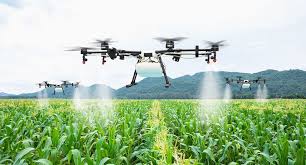
Course Overview
Training Course on Drone Applications in Agriculture
Introduction
The integration of drone technology is rapidly transforming agricultural practices, offering unprecedented opportunities for enhanced efficiency, precision, and sustainability. Training Course on Drone Applications in Agriculture delves into the diverse applications of drones in agriculture, equipping participants with the knowledge and skills to leverage this cutting-edge technology effectively. By mastering drone operation, data acquisition, and insightful analytics, agricultural professionals can optimize resource management, improve crop yields, and make data-driven decisions. This course addresses the growing demand for expertise in this dynamic field, providing a pathway to innovation and a competitive edge in the modern agricultural landscape.
This specialized program provides a thorough understanding of how unmanned aerial vehicles (UAVs) can be deployed across various stages of the agricultural cycle. From precision spraying and crop health monitoring to livestock management and field mapping, participants will gain practical insights into maximizing the benefits of drone technology. The curriculum emphasizes hands-on learning, industry best practices, and the ethical considerations surrounding drone usage in agriculture. Upon completion, participants will be well-versed in the latest advancements and equipped to implement drone solutions to address real-world agricultural challenges.
Course Duration
10 days
Course Objectives
This training course aims to equip participants with the following key competencies:
- Understand the fundamentals of drone technology and its relevance to modern agriculture.
- Identify various types of agricultural drones and their specific applications.
- Master the regulations and legal frameworks for drone operation in agricultural settings.
- Develop proficiency in pre-flight planning and risk assessment for drone missions.
- Gain hands-on experience in drone operation and flight control for agricultural tasks.
- Learn effective techniques for data acquisition using drone-mounted sensors (e.g., RGB, multispectral, thermal).
- Understand the principles of remote sensing and data processing for agricultural analysis.
- Utilize software and platforms for agricultural data analysis and visualization.
- Apply drone technology for precision spraying and variable rate application.
- Implement drone-based solutions for crop health monitoring and disease detection.
- Explore the use of drones in livestock management and pasture assessment.
- Understand the application of drones for field mapping, surveying, and yield estimation.
- Evaluate the economic and environmental benefits of using drones in agriculture.
Organizational Benefits
- Increased Efficiency
- Improved Precision
- Enhanced Decision-Making
- Early Problem Detection
- Resource Optimization.
- Enhanced Sustainability.
- Competitive Advantage
- Skilled Workforce
Target Audience
- Farmers and Growers
- Agricultural Consultants
- Agronomists
- Farm Managers
- Agricultural Researchers
- Extension Officers
- Technology Providers in Agriculture
- Individuals interested in drone technology and agriculture
Course Outline
Module 1: Introduction to Drones in Agriculture
- Overview of drone technology and its evolution.
- The significance of drones in modern agricultural practices.
- Different types of drones used in agriculture (fixed-wing, multi-rotor).
- Key components of an agricultural drone system.
- Benefits and challenges of drone adoption in agriculture.
Module 2: Regulatory Framework and Safety Guidelines
- Understanding national and local regulations for drone operation.
- Airspace management and flight restrictions.
- Safety protocols and best practices for drone operations.
- Risk assessment and mitigation strategies.
- Insurance and liability considerations for agricultural drone use.
Module 3: Drone Hardware and Sensors for Agriculture
- Detailed overview of various drone platforms suitable for agriculture.
- Understanding different types of sensors (RGB, multispectral, hyperspectral, thermal, LiDAR).
- Principles of sensor operation and data acquisition.
- Calibration and maintenance of drone hardware and sensors.
- Matching the right drone and sensor to specific agricultural applications.
Module 4: Mission Planning and Flight Operations
- Software and tools for pre-flight planning and mission design.
- Defining flight parameters (altitude, speed, overlap, waypoints).
- Executing automated flight missions for data acquisition.
- Manual flight techniques for specific agricultural tasks.
- Troubleshooting common issues during flight operations.
Module 5: Data Acquisition and Management
- Best practices for capturing high-quality aerial imagery and data.
- Understanding image resolution, accuracy, and georeferencing.
- Data storage, organization, and backup strategies.
- Data formats and compatibility with analysis software.
- Ensuring data integrity and security.
Module 6: Introduction to Remote Sensing and GIS
- Fundamentals of remote sensing principles.
- Understanding electromagnetic spectrum and spectral signatures of vegetation.
- Introduction to Geographic Information Systems (GIS) and its applications in agriculture.
- Spatial data analysis and interpretation.
- Integrating drone-acquired data with GIS platforms.
Module 7: Image Processing and Analysis Software
- Overview of popular software for processing drone imagery (e.g., Pix4D, Agisoft Metashape).
- Orthomosaic generation and digital surface model creation.
- Vegetation index calculation (NDVI, EVI, etc.).
- Object-based image analysis (OBIA) for feature extraction.
- Accuracy assessment and validation of processed data.
Module 8: Drone Applications in Crop Health Monitoring
- Using drones for early detection of plant stress and diseases.
- Identifying nutrient deficiencies and water stress.
- Assessing crop vigor and biomass estimation.
- Generating prescription maps for variable rate fertilization.
- Monitoring the impact of pests and weeds.
Module 9: Precision Spraying and Variable Rate Application
- Understanding the principles of precision spraying technology.
- Using drones for targeted application of pesticides, herbicides, and fertilizers.
- Generating variable rate application maps based on drone data.
- Optimizing spray efficiency and reducing chemical usage.
- Environmental benefits of drone-based precision spraying.
Module 10: Drones in Livestock Management and Pasture Assessment
- Using drones for monitoring livestock movement and behavior.
- Assessing pasture health and grazing patterns.
- Locating stray or injured animals.
- Calculating stocking density and pasture biomass.
- Applications of thermal imaging for livestock monitoring.
Module 11: Field Mapping, Surveying, and Yield Estimation
- Creating high-resolution orthomaps and digital elevation models of agricultural fields.
- Conducting topographic surveys and generating contour maps.
- Calculating field area and boundaries accurately.
- Using drone data for yield estimation and prediction.
- Supporting land management and infrastructure planning.
Module 12: Data Interpretation and Decision Support Systems
- Extracting meaningful insights from drone-derived data.
- Developing data-driven decision support systems for farm management.
- Integrating drone data with other farm management software.
- Communicating findings effectively through reports and visualizations.
- Case studies of successful drone implementation in agriculture.
Module 13: Economic and Environmental Considerations
- Analyzing the cost-benefit of adopting drone technology in agriculture.
- Return on investment (ROI) calculations for drone implementation.
- Assessing the environmental impact of drone use compared to traditional methods.
- Exploring sustainable agricultural practices enabled by drones.
- Future trends and potential economic opportunities in agricultural drone services.
Module 14: Integrating Drones with Other Agricultural Technologies
- Synergies between drones and GPS technology.
- Combining drone data with soil sensors and weather stations.
- Integrating drones with agricultural robots and automation systems.
- The role of drones in the Internet of Things (IoT) for agriculture.
- Building a comprehensive smart farming ecosystem.
Module 15: Future Trends and Innovations in Agricultural Drones
- Emerging drone technologies and applications in agriculture.
- Advancements in drone hardware, software, and sensors.
- The potential of artificial intelligence and machine learning for drone data analysis.
- Regulatory landscape evolution for agricultural drones.
- Opportunities for entrepreneurship and career growth in the agricultural drone sector.
Training Methodology
This training course will employ a blended learning approach, combining:
- Interactive Lectures: Providing foundational knowledge and theoretical concepts.
- Hands-on Practical Sessions: Offering real-world experience in drone operation, data acquisition, and processing.
- Case Studies and Demonstrations: Illustrating successful applications of drones in diverse agricultural settings.
- Group Discussions and Collaborative Activities: Fostering peer learning and knowledge sharing.
- Software Tutorials: Providing step-by-step guidance on using relevant software and platforms.
- Field ???????????? exercises: Conducting drone missions and data collection in agricultural environments.
- Assessment and Feedback: Evaluating participant progress and providing constructive feedback.
Register as a group from 3 participants for a Discount
Send us an email: info@datastatresearch.org or call +254724527104
Certification
Upon successful completion of this training, participants will be issued with a globally- recognized certificate.
Tailor-Made Course
We also offer tailor-made courses based on your needs.
Key Notes
a. The participant must be conversant with English.
b. Upon completion of training the participant will be issued with an Authorized Training Certificate
c. Course duration is flexible and the contents can be modified to fit any number of days.
d. The course fee includes facilitation training materials, 2 coffee breaks, buffet lunch and A Certificate upon successful completion of Training.
e. One-year post-training support Consultation and Coaching provided after the course.
f. Payment should be done at least a week before commence of the training, to DATASTAT CONSULTANCY LTD account, as indicated in the invoice so as to enable us prepare better for you.