Training Course on Crop Physiology and Stress Management (Drought, Salinity, Heat)
Training Course on Crop Physiology and Stress Management (Drought, Salinity, Heat) aims to empower agricultural professionals, researchers, and extension workers with in-depth knowledge of how crops respond physiologically to abiotic stress and how to manage these stresses effectively.
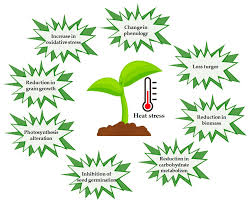
Course Overview
Training Course on Crop Physiology and Stress Management (Drought, Salinity, Heat)
Introduction
Agriculture today faces escalating environmental challenges due to climate change, with drought, salinity, and extreme heat becoming common stressors affecting crop productivity. Training Course on Crop Physiology and Stress Management (Drought, Salinity, Heat) aims to empower agricultural professionals, researchers, and extension workers with in-depth knowledge of how crops respond physiologically to abiotic stress and how to manage these stresses effectively. The course integrates cutting-edge research with practical field applications, focusing on the biochemical, molecular, and physiological responses of crops to environmental stressors. It also explores sustainable farming practices, climate-resilient crop varieties, and adaptive strategies to ensure food security and improve yields under challenging conditions.
This highly relevant training brings together experts in crop science, climate-smart agriculture, and soil-water-plant relationships to deliver engaging, interactive content aligned with current trends and technological advancements. Through case studies, real-world examples, and hands-on modules, participants will gain expertise in stress tolerance mechanisms, precision agriculture, and integrated crop management techniques. This course is essential for those seeking to build climate resilience in agriculture through stress-mitigation strategies, improved crop productivity, and adaptive management approaches rooted in crop physiology.
Course Objectives
- Understand crop physiological responses to abiotic stress conditions.
- Analyze drought-induced metabolic and photosynthetic changes in crops.
- Identify salt stress effects on plant water relations and ion toxicity.
- Explore the impact of heat stress on reproductive development and yield.
- Study plant signaling pathways under stress environments.
- Integrate molecular tools for breeding climate-resilient crops.
- Apply precision agriculture tools for stress detection and monitoring.
- Develop water-efficient irrigation strategies under drought conditions.
- Examine soil salinity management and reclamation practices.
- Promote heat-resilient cropping systems and agronomic practices.
- Evaluate crop simulation models for stress prediction and planning.
- Implement integrated crop management for enhanced stress resilience.
- Learn from global case studies and field trials on stress mitigation.
Target Audiences
- Agronomists and Crop Scientists
- Agricultural Extension Officers
- Researchers in Plant Physiology
- Policy Makers in Agriculture and Climate
- University Students in Agriculture and Environmental Sciences
- NGO Staff in Sustainable Agriculture Projects
- Private Sector Professionals in AgriTech
- Farm Managers and Lead Farmers
Course Duration: 5 days
Course Modules
Module 1: Introduction to Crop Physiology and Environmental Stress
- Fundamentals of plant physiology
- Overview of abiotic stresses in crops
- Photosynthesis, transpiration, and respiration processes
- Stress signaling and adaptive responses
- Impact on crop development stages
- Case Study: Physiology of drought response in maize in Sub-Saharan Africa
Module 2: Drought Stress and Crop Management
- Mechanisms of drought tolerance
- Water-use efficiency strategies
- Stomatal regulation and osmotic adjustment
- Role of root architecture in drought resistance
- Drought-tolerant crop varieties
- Case Study: Water-saving wheat varieties in India
Module 3: Salinity Stress and Soil Management
- Salt stress impact on plant metabolism
- Ion toxicity and nutrient imbalance
- Soil salinity diagnosis and classification
- Leaching, gypsum application, and phytoremediation
- Salt-tolerant genotypes and biotechnological solutions
- Case Study: Saline agriculture practices in coastal Bangladesh
Module 4: Heat Stress and Crop Development
- Heat effects on flowering and grain filling
- Protein denaturation and enzyme deactivation
- Heat-shock proteins and tolerance mechanisms
- Night-time temperature stress effects
- Thermo-tolerant varieties and shading techniques
- Case Study: Rice productivity under heatwaves in Southeast Asia
Module 5: Molecular and Genetic Basis of Stress Tolerance
- Gene expression under stress conditions
- Role of transcription factors and stress-responsive genes
- Marker-assisted breeding and CRISPR
- Genomic selection for stress tolerance
- Omics technologies in stress research
- Case Study: CRISPR-edited tomato plants for salinity tolerance
Module 6: Precision Agriculture and Stress Monitoring
- Remote sensing and GIS applications
- Use of drones and sensors for stress detection
- Crop modeling and forecasting tools
- Big data and AI in crop stress analytics
- Decision-support systems for farmers
- Case Study: Drone-based drought detection in Ethiopia
Module 7: Agronomic Practices for Stress Mitigation
- Conservation agriculture and mulching
- Planting time and crop rotation strategies
- Soil fertility enhancement under stress
- Integrated nutrient and pest management
- Stress-buffering foliar applications and bio-stimulants
- Case Study: Mulch-based moisture retention in dryland farming in Kenya
Module 8: Climate Resilience and Future Outlook
- Climate change impact on crop productivity
- Risk assessment and contingency planning
- Farmer education and participatory extension
- Innovation platforms for resilient agriculture
- Policy frameworks and institutional support
- Case Study: Farmer-led innovation in heat resilience in West Africa
Training Methodology
- Expert-led interactive lectures
- Hands-on practical demonstrations
- Group discussions and scenario analysis
- Case study presentations and evaluations
- Field visits or virtual farm tours
- Pre/post assessments for impact measurement
Register as a group from 3 participants for a Discount
Send us an email: info@datastatresearch.org or call +254724527104
Certification
Upon successful completion of this training, participants will be issued with a globally- recognized certificate.
Tailor-Made Course
We also offer tailor-made courses based on your needs.
Key Notes
a. The participant must be conversant with English.
b. Upon completion of training the participant will be issued with an Authorized Training Certificate
c. Course duration is flexible and the contents can be modified to fit any number of days.
d. The course fee includes facilitation training materials, 2 coffee breaks, buffet lunch and A Certificate upon successful completion of Training.
e. One-year post-training support Consultation and Coaching provided after the course.
f. Payment should be done at least a week before commence of the training, to DATASTAT CONSULTANCY LTD account, as indicated in the invoice so as to enable us prepare better for you.