Training Course on Cover Crop Selection and Management for Different Agro-Ecologies
Training Course on Cover Crop Selection and Management for Different Agro-Ecologies is designed to empower farmers, agronomists, agricultural extension officers, researchers, and policy advocates with climate-smart, sustainable strategies for soil fertility enhancement, weed suppression, water conservation, and biodiversity promotion.
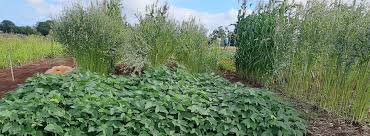
Course Overview
Training Course on Cover Crop Selection and Management for Different Agro-Ecologies
Introduction
Training Course on Cover Crop Selection and Management for Different Agro-Ecologies is designed to empower farmers, agronomists, agricultural extension officers, researchers, and policy advocates with climate-smart, sustainable strategies for soil fertility enhancement, weed suppression, water conservation, and biodiversity promotion. As regenerative agriculture and sustainable land management continue to gain momentum globally, cover cropping stands out as a vital tool for ecological resilience, carbon sequestration, and agroecosystem productivity. This course dives into the science, practice, and real-world applications of cover crop systems tailored to varied agro-ecological zones.
Participants will explore adaptive strategies for selecting suitable cover crop species based on rainfall patterns, soil types, elevation, and regional cropping systems. Through practical modules, real case studies, and evidence-based methodologies, learners will develop skills to integrate cover crops into conservation agriculture systems, optimize nutrient cycling, manage pests naturally, and mitigate climate change impacts. Whether operating in arid regions, humid tropics, highlands, or temperate zones, learners will be equipped with transformative tools to enhance farm productivity, promote environmental sustainability, and ensure long-term soil health.
Course Objectives
- Understand the role of cover crops in sustainable agriculture.
- Identify region-specific cover crops for different agro-ecological zones.
- Learn how to improve soil fertility naturally using legumes and green manure crops.
- Analyze cover cropping systems for weed and pest control.
- Explore the climate-resilience benefits of cover cropping.
- Evaluate nutrient management techniques in cover crop systems.
- Design rotational plans incorporating cover crops for small and large farms.
- Discover economic benefits of cover cropping in agroecological practices.
- Examine water conservation strategies through cover crop mulching.
- Implement carbon sequestration practices using diverse cover crops.
- Compare cover crop performance under different rainfall regimes.
- Utilize decision-making tools for cover crop selection.
- Build capacity in community-driven sustainable land management using cover crops.
Target Audiences
- Smallholder farmers
- Commercial crop producers
- Agricultural extension officers
- Soil and crop scientists
- Environmental conservationists
- Policy-makers in agriculture and climate
- NGOs working in food security and rural development
- Agricultural education and training institutions
Course Duration: 5 days
Course Modules
Module 1: Introduction to Cover Crops and Agro-Ecology
- Definition and types of cover crops
- Importance in agro-ecological farming systems
- Overview of global and regional adoption
- Key ecological functions
- Compatibility with cropping systems
- Case Study: Adoption of cover crops in Kenya’s Central Highlands
Module 2: Classification and Functions of Cover Crops
- Nitrogen-fixing legumes vs. non-legumes
- Soil cover and erosion control
- Biodiversity enhancement
- Suppression of weeds
- Carbon cycling and storage
- Case Study: Cowpea and lablab integration in West Africa
Module 3: Selection Criteria for Different Agro-Ecologies
- Climate and rainfall considerations
- Soil type and fertility status
- Elevation and topography
- Cropping calendar and farming systems
- Pest and disease pressure
- Case Study: Upland vs. lowland cover crop selection in Southeast Asia
Module 4: Soil Fertility and Nutrient Management
- Role of green manure
- Biomass incorporation and decomposition
- Soil microbial health
- Nutrient availability and cycling
- Integration with compost and organic matter
- Case Study: Mucuna pruriens in degraded soils of Tanzania
Module 5: Cover Crops and Water Management
- Water infiltration and retention
- Mulching effects on evaporation
- Drought resilience
- Impact on water tables
- Irrigation planning with cover crops
- Case Study: Sorghum-sudan grass in semi-arid lands of India
Module 6: Pest, Weed, and Disease Suppression
- Allelopathy in cover crops
- Life cycle interruption of pests
- Host resistance properties
- Management of disease vectors
- Organic pest control strategies
- Case Study: Mustard cover crops reducing nematodes in California vineyards
Module 7: Integrating Cover Crops into Farming Systems
- Intercropping and relay cropping techniques
- Seasonal planning
- Machinery and labor requirements
- Residue management
- Economic return and yield impact
- Case Study: Rice–cover crop rotation in the Philippines
Module 8: Monitoring, Evaluation, and Scaling Up
- Tools for performance monitoring
- Cost-benefit analysis
- Community-based adoption models
- Policy support and incentives
- Challenges and opportunities in scaling
- Case Study: Farmer cooperatives scaling cover crops in Rwanda
Training Methodology
- Participatory learning and group discussions
- Hands-on demonstrations and field visits
- Interactive case study analysis
- Visual aids (videos, infographics, charts)
- Practical assignments and local context application
- Expert guest speakers and agronomists’ Q&A
Register as a group from 3 participants for a Discount
Send us an email: info@datastatresearch.org or call +254724527104
Certification
Upon successful completion of this training, participants will be issued with a globally- recognized certificate.
Tailor-Made Course
We also offer tailor-made courses based on your needs.
Key Notes
a. The participant must be conversant with English.
b. Upon completion of training the participant will be issued with an Authorized Training Certificate
c. Course duration is flexible and the contents can be modified to fit any number of days.
d. The course fee includes facilitation training materials, 2 coffee breaks, buffet lunch and A Certificate upon successful completion of Training.
e. One-year post-training support Consultation and Coaching provided after the course.
f. Payment should be done at least a week before commence of the training, to DATASTAT CONSULTANCY LTD account, as indicated in the invoice so as to enable us prepare better for you.