Training course on Cost-Effectiveness Analysis of Social Protection Interventions
Training Course on Cost-Effectiveness Analysis of Social Protection Interventions is meticulously designed to equip with the advanced theoretical insights and intensive practical tools necessary to excel
Skills Covered
Course Overview
Training Course on Cost-Effectiveness Analysis of Social Protection Interventions
Introduction
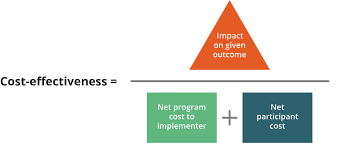
Cost-Effectiveness Analysis (CEA) of Social Protection Interventions is a vital analytical tool for optimizing resource allocation and demonstrating the efficiency of programs designed to reduce poverty, vulnerability, and inequality. In an environment of increasing demand for social protection and often limited public budgets, decision-makers face critical choices about which interventions to fund and scale. CEA provides a systematic framework for comparing the costs of different programs relative to their achieved outcomes, enabling policymakers to identify the most efficient ways to achieve specific social protection objectives. This course moves beyond simply measuring impact to rigorously assessing the "value for money" of interventions, ensuring that investments in social protection yield the greatest possible social returns.
Training Course on Cost-Effectiveness Analysis of Social Protection Interventions is meticulously designed to equip with the advanced theoretical insights and intensive practical tools necessary to excel in Cost-Effectiveness Analysis of Social Protection Interventions. We will delve into the foundational concepts of economic evaluation, master the intricacies of identifying and valuing costs and outcomes, and explore cutting-edge approaches to conducting CEA, sensitivity analysis, and presenting findings. A significant focus will be placed on hands-on application using real-world social protection programs, interpreting complex results, and effectively communicating findings to inform resource allocation decisions. By integrating industry best practices, analyzing complex case studies, and engaging in intensive practical exercises, attendees will develop the strategic acumen to confidently lead and implement rigorous CEA, fostering unparalleled efficiency, accountability, and evidence-informed resource allocation in social protection.
Course Objectives
Upon completion of this course, participants will be able to:
- Analyze the fundamental concepts of economic evaluation and the specific role of Cost-Effectiveness Analysis (CEA).
- Comprehend the strategic importance of CEA for optimizing resource allocation in social protection.
- Master methodologies for identifying and measuring all relevant costs of social protection interventions.
- Develop expertise in measuring and valuing program outcomes for CEA.
- Formulate strategies for conducting a comprehensive Cost-Effectiveness Analysis.
- Understand the critical role of discounting and inflation adjustments in CEA.
- Implement robust approaches to sensitivity analysis and uncertainty assessment in CEA.
- Explore key strategies for interpreting and presenting CEA results (e.g., ICER).
- Apply methodologies for comparing different social protection interventions using CEA.
- Understand and address ethical considerations in economic evaluation.
- Develop preliminary skills in using software tools for CEA (e.g., Excel, specialized models).
- Conduct a full Cost-Effectiveness Analysis of a social protection program.
- Examine global best practices and lessons learned in CEA for social protection.
Target Audience
This course is essential for professionals involved in the economic aspects of social protection:
- Social Protection Policymakers: Making decisions on program funding and design.
- Program Managers & Coordinators: Overseeing program budgets and efficiency.
- Economists & Public Finance Experts: Analyzing government spending and social investments.
- M&E Specialists: Integrating economic evaluation into impact assessments.
- Government Officials: From ministries of finance, planning, and social welfare.
- Development Practitioners: From NGOs and international organizations.
- Researchers & Academics: Conducting economic evaluations of social programs.
- Budget Officers: Allocating resources for social protection.
Course Duration: 10 Days
Course Modules
Module 1: Foundations of Economic Evaluation in Social Protection
- Define economic evaluation and its different types (CEA, CBA, CUA).
- Understand the specific purpose and application of Cost-Effectiveness Analysis (CEA).
- Discuss the importance of economic evaluation for resource allocation decisions.
- Explore the conceptual framework of efficiency in social protection.
- Identify the key steps in conducting any economic evaluation.
Module 2: Identifying and Measuring Program Costs
- Master methodologies for systematically identifying all relevant costs.
- Differentiate between direct and indirect costs, fixed and variable costs.
- Learn to collect cost data from various sources (administrative records, financial reports).
- Understand how to value different types of costs (e.g., personnel, materials, overheads).
- Practice categorizing and aggregating program costs.
Module 3: Valuing Program Outcomes for CEA
- Develop expertise in measuring program outcomes for CEA.
- Understand the importance of using natural units for outcomes (e.g., number of households lifted out of poverty, number of children completing school).
- Discuss challenges in attributing outcomes to specific interventions.
- Explore methods for collecting outcome data (e.g., surveys, administrative data).
- Ensure outcome measures are relevant to the social protection objectives.
Module 4: Conducting a Comprehensive Cost-Effectiveness Analysis
- Formulate strategies for conducting a step-by-step CEA.
- Learn to calculate the total cost and total effect of an intervention.
- Understand the calculation of the Average Cost-Effectiveness Ratio (ACER).
- Discuss how to compare two or more interventions using the Incremental Cost-Effectiveness Ratio (ICER).
- Practice conducting a basic CEA for a social protection program.
Module 5: Discounting and Inflation Adjustment
- Understand the critical role of discounting in economic evaluation.
- Learn to apply discount rates to future costs and benefits.
- Discuss the rationale for discounting in social protection.
- Explore methods for adjusting costs and outcomes for inflation.
- Practice calculating discounted values.
Module 6: Sensitivity Analysis and Uncertainty Assessment
- Implement robust approaches to sensitivity analysis in CEA.
- Understand the importance of testing assumptions and varying parameters.
- Learn to conduct one-way, multi-way, and probabilistic sensitivity analyses.
- Discuss decision trees and scenario analysis for uncertainty.
- Practice performing sensitivity analysis using software (e.g., Excel).
Module 7: Interpreting and Presenting CEA Results
- Explore key strategies for interpreting CEA results effectively.
- Understand the meaning and implications of ICER values.
- Discuss the use of cost-effectiveness planes and acceptability curves.
- Learn to present CEA findings clearly and concisely for policymakers.
- Practice communicating the "value for money" of social protection interventions.
Module 8: Comparing Interventions and Decision-Making
- Apply methodologies for comparing multiple social protection interventions using CEA.
- Understand the concept of a "frontier" of cost-effective interventions.
- Discuss how CEA informs resource allocation and prioritization decisions.
- Explore the role of CEA in scale-up decisions for successful programs.
- Analyze case studies of CEA informing policy choices.
Module 9: Ethical Considerations in Economic Evaluation
- Understand and address ethical considerations in economic evaluation.
- Discuss the tension between efficiency and equity in social protection.
- Explore issues of valuing human life and well-being.
- Learn to ensure transparency and avoid bias in CEA.
- Analyze ethical dilemmas encountered in real-world CEAs.
Module 10: Software Tools for CEA and Practical Application
- Develop preliminary skills in using software tools for CEA.
- Gain hands-on experience with Excel for setting up CEA models.
- Explore specialized software or templates for economic evaluation.
- Conduct a full, hands-on Cost-Effectiveness Analysis of a social protection program using real or simulated data.
- Present the findings and discuss their policy implications.
Module 11: Beyond CEA: Introduction to Cost-Benefit Analysis (CBA)
- Differentiate CEA from Cost-Benefit Analysis (CBA).
- Understand the concept of monetizing all benefits and costs.
- Discuss the strengths and limitations of CBA for social protection.
- Explore techniques for valuing intangible benefits (e.g., improved well-being).
- Analyze when CBA is more appropriate than CEA
Module 12: Advanced Topics and Future Directions
- Explore advanced topics in economic evaluation (e.g., equity-effectiveness analysis).
- Discuss the role of economic evaluation in adaptive social protection.
- Consider the use of big data and AI in cost analysis.
- Examine the evolving landscape of economic evaluation in development.
- Review global best practices and emerging trends in social protection CEA.
Training Methodology
- Interactive Workshops: Facilitated discussions, group exercises, and problem-solving activities.
- Case Studies: Real-world examples to illustrate successful community-based surveillance practices.
- Role-Playing and Simulations: Practice engaging communities in surveillance activities.
- Expert Presentations: Insights from experienced public health professionals and community leaders.
- Group Projects: Collaborative development of community surveillance plans.
- Action Planning: Development of personalized action plans for implementing community-based surveillance.
- Digital Tools and Resources: Utilization of online platforms for collaboration and learning.
- Peer-to-Peer Learning: Sharing experiences and insights on community engagement.
- Post-Training Support: Access to online forums, mentorship, and continued learning resources.
Register as a group from 3 participants for a Discount
Send us an email: info@datastatresearch.org or call +254724527104
Certification
Upon successful completion of this training, participants will be issued with a globally recognized certificate.
Tailor-Made Course
We also offer tailor-made courses based on your needs.
Key Notes
- Participants must be conversant in English.
- Upon completion of training, participants will receive an Authorized Training Certificate.
- The course duration is flexible and can be modified to fit any number of days.
- Course fee includes facilitation, training materials, 2 coffee breaks, buffet lunch, and a Certificate upon successful completion.
- One-year post-training support, consultation, and coaching provided after the course.
- Payment should be made at least a week before the training commencement to DATASTAT CONSULTANCY LTD account, as indicated in the invoice, to enable better preparation.