Training Course on Conservation Agriculture: No-Till, Cover Cropping and Diversification
Training Course on Conservation Agriculture No-Till, Cover Cropping and Diversification is structured to empower agricultural professionals, agribusinesses, and farming communities with practical knowledge and hands-on techniques to transition into sustainable farming practices.
Course Overview
Training Course on Conservation Agriculture: No-Till, Cover Cropping and Diversification
Introduction
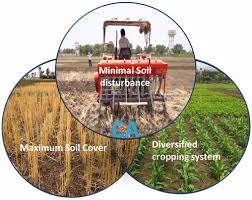
Conservation agriculture has emerged as a sustainable farming model designed to enhance soil health, optimize crop productivity, and promote climate resilience. Training Course on Conservation Agriculture: No-Till, Cover Cropping and Diversification is structured to empower agricultural professionals, agribusinesses, and farming communities with practical knowledge and hands-on techniques to transition into sustainable farming practices. With global challenges such as soil degradation, water scarcity, and food insecurity on the rise, the implementation of no-till farming, cover cropping, and crop diversification offers a scientifically backed path to restore agroecosystems and improve yields.
As modern agriculture demands more resilient and climate-smart solutions, this course will cover key techniques that reduce input costs, increase biodiversity, improve carbon sequestration, and strengthen food systems. Participants will gain expertise in designing conservation farming systems, understanding soil biology, managing residues, integrating rotations, and applying precision agri-tech tools. Backed by real-world case studies, this course will prepare participants to apply conservation agriculture methods in diverse agro-climatic zones.
Training Objectives
- Understand the principles of conservation agriculture for sustainable land use.
- Learn the benefits of no-till farming in reducing erosion and boosting soil structure.
- Master the practice of cover cropping for weed suppression and nitrogen fixation.
- Analyze the role of crop diversification in enhancing farm resilience.
- Apply soil health management techniques to improve productivity.
- Explore climate-smart agriculture practices for adapting to changing environments.
- Learn how to implement integrated pest management (IPM) in conservation systems.
- Use data-driven decision-making for conservation farming systems.
- Understand carbon farming and sequestration techniques.
- Develop sustainable crop rotations for increased biodiversity.
- Gain skills in agricultural water management with reduced runoff.
- Study the use of precision agriculture tools for no-till and cover crops.
- Evaluate economic benefits and ROI of conservation agriculture.
Target Audiences
- Agronomists and soil scientists
- Smallholder and commercial farmers
- Agricultural extension officers
- Climate resilience project managers
- NGO and development practitioners
- Sustainable farming startups
- Agricultural policymakers and planners
- Students in agricultural and environmental sciences
Course Duration: 5 days
Course Modules
Module 1: Foundations of Conservation Agriculture
- Principles of conservation agriculture
- Historical evolution and global adoption trends
- Soil health and biodiversity in CA systems
- Comparison with conventional agriculture
- Role in sustainable development goals (SDGs)
- Case Study: Zambia’s national conservation agriculture program
Module 2: No-Till Farming Techniques
- Benefits of zero tillage on soil structure
- Equipment used in no-till operations
- Reducing compaction and improving infiltration
- Weed management in no-till systems
- Challenges and misconceptions about no-till
- Case Study: Argentina's success in commercial no-till farming
Module 3: Cover Cropping Systems
- Types of cover crops (legumes, grasses, brassicas)
- Seasonal and rotational planning
- Biomass management and residue retention
- Soil nutrient cycling and improvement
- Cover crops in pest and weed control
- Case Study: Multi-species cover cropping in Iowa, USA
Module 4: Crop Diversification Strategies
- Importance of polycultures and intercropping
- Diversification for pest and disease control
- Crop-livestock integration
- Enhancing market resilience and value chains
- Choosing the right crop mix for climate adaptation
- Case Study: Diversification model in Kenyan drylands
Module 5: Soil Health and Organic Matter Management
- Role of organic matter in soil fertility
- Soil biology: microbes, worms, and fungi
- Managing residues and compost applications
- Soil testing and analysis tools
- Erosion control practices
- Case Study: Regenerative soil restoration in India’s Deccan Plateau
Module 6: Water and Nutrient Management in CA
- Reducing evaporation and runoff
- Efficient irrigation techniques in no-till systems
- Cover crops and moisture retention
- Nutrient release through green manure
- Rainwater harvesting integration
- Case Study: Conservation agriculture in Ethiopia's dry highlands
Module 7: Climate-Smart Technologies and Mechanization
- Precision agriculture tools for CA
- Climate forecasting and cropping calendars
- Remote sensing and satellite data use
- Small-scale mechanization options
- Digital platforms and mobile apps in CA
- Case Study: Farmer-led CA digitization in Brazil
Module 8: Economics and Policy of Conservation Agriculture
- Cost-benefit analysis of CA adoption
- Policy incentives and subsidies
- Financing and risk mitigation tools
- Farmer cooperatives and market access
- Scaling CA through public-private partnerships
- Case Study: CA integration into Rwanda’s national ag policy
Training Methodology
- Interactive expert-led sessions
- Practical field demonstrations
- Hands-on training with conservation tools
- Group exercises and peer-learning
- Real-life case study analysis
- Knowledge assessments and certification
Register as a group from 3 participants for a Discount
Send us an email: info@datastatresearch.org or call +254724527104
Certification
Upon successful completion of this training, participants will be issued with a globally- recognized certificate.
Tailor-Made Course
We also offer tailor-made courses based on your needs.
Key Notes
a. The participant must be conversant with English.
b. Upon completion of training the participant will be issued with an Authorized Training Certificate
c. Course duration is flexible and the contents can be modified to fit any number of days.
d. The course fee includes facilitation training materials, 2 coffee breaks, buffet lunch and A Certificate upon successful completion of Training.
e. One-year post-training support Consultation and Coaching provided after the course.
f. Payment should be done at least a week before commence of the training, to DATASTAT CONSULTANCY LTD account, as indicated in the invoice so as to enable us prepare better for you.