Training Course on Confined Space Entry Safety
Training Course on Confined Space Entry Safety equips professionals with the essential knowledge and practical skills to identify, assess, and control hazards associated with confined spaces.
Skills Covered
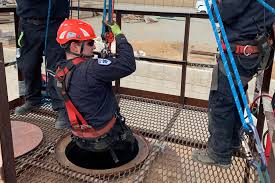
Course Overview
Training Course on Confined Space Entry Safety
Introduction
Confined space entry safety is a critical component of industrial and occupational health, particularly in sectors such as construction, manufacturing, oil and gas, mining, and utilities. Training Course on Confined Space Entry Safety equips professionals with the essential knowledge and practical skills to identify, assess, and control hazards associated with confined spaces. By implementing OSHA standards, PPE protocols, atmospheric testing, and emergency rescue planning, this course provides a high-level safety framework aligned with industry compliance and risk management strategies.
As workplace safety becomes more regulated and data-driven, the importance of confined space safety training continues to rise. With a focus on incident prevention, hazard mitigation, and regulatory compliance, this training leverages real-world case studies and hands-on simulations. Participants will gain insights into risk assessment, lockout/tagout procedures, air quality monitoring, and permit systems to ensure safe entry and exit practices. The course ensures participants are certified and competent to perform confined space tasks with minimized risks and maximized efficiency.
Course Objectives
- Understand OSHA confined space regulations and standards.
- Identify and classify permit-required confined spaces.
- Conduct effective hazard identification and risk assessments.
- Utilize advanced atmospheric testing equipment and protocols.
- Implement Lockout/Tagout (LOTO) procedures to ensure energy isolation.
- Master the confined space permit system and documentation process.
- Recognize the importance of continuous monitoring in confined spaces.
- Develop and execute confined space emergency response plans.
- Apply appropriate personal protective equipment (PPE) usage techniques.
- Perform duties and responsibilities as an entrant, attendant, or supervisor.
- Analyze real-world confined space incidents and preventive measures.
- Integrate safety culture and behavior-based safety practices in operations.
- Achieve compliance with ISO and OSHA standards through best practices.
Target Audience
- Safety Officers
- Maintenance Personnel
- Industrial Engineers
- Plant Supervisors
- Construction Workers
- Utility Workers
- Fire and Rescue Teams
- EHS (Environment, Health & Safety) Managers
Course Duration: 5 days
Course Modules
Module 1: Introduction to Confined Spaces
- Definition and examples of confined spaces
- Distinction between permit-required and non-permit confined spaces
- OSHA 29 CFR 1910.146 compliance overview
- Legal implications of non-compliance
- Importance of confined space policies in the workplace
- Case Study: Fatal Entry in a Utility Vault – Analysis of regulatory violations
Module 2: Hazard Identification and Risk Assessment
- Types of confined space hazards (physical, atmospheric, biological)
- Risk assessment models and techniques
- Use of safety checklists and audits
- Introduction to behavior-based safety
- Responsibilities of safety personnel
- Case Study: Near Miss in Food Processing Tank – Risk overlooked
Module 3: Atmospheric Monitoring and Testing
- Air quality standards and toxic gas limits
- Use of gas detectors and multi-gas monitors
- Procedures for pre-entry and continuous monitoring
- Calibration and maintenance of monitoring devices
- Interpretation of test results
- Case Study: Hydrogen Sulfide Exposure – Delay in detection
Module 4: Personal Protective Equipment (PPE)
- Types of PPE for confined spaces
- Selection criteria based on hazards
- Respiratory protection and SCBA
- Donning and doffing procedures
- Limitations and inspection of PPE
- Case Study: Inadequate PPE use during confined tank entry
Module 5: Permit Systems and Documentation
- Components of a confined space entry permit
- Pre-entry procedures and authorization
- Roles and responsibilities: entrant, attendant, supervisor
- Communication protocols during entry
- Recordkeeping and legal requirements
- Case Study: Unauthorized Entry Without Permit – Liability consequences
Module 6: Lockout/Tagout (LOTO) and Energy Isolation
- Overview of hazardous energy sources
- Steps in LOTO implementation
- Equipment shutdown procedures
- Tagging and verification protocols
- Common LOTO mistakes and how to avoid them
- Case Study: Energized Conveyor Incident – LOTO bypassed
Module 7: Emergency Response and Rescue Planning
- Types of confined space emergencies
- Rescue team qualifications and readiness
- Use of retrieval systems and tripods
- Communication and evacuation procedures
- Coordination with local emergency services
- Case Study: Failed Rescue Attempt – Lack of proper planning
Module 8: Training, Certification & Safety Culture
- Ongoing training and re-certification requirements
- Creating a proactive safety culture
- Employee engagement in safety programs
- Use of safety dashboards and reporting tools
- Conducting mock drills and scenario planning
- Case Study: Successful Mitigation Strategy – Proactive safety culture at work
Training Methodology
- Instructor-led interactive presentations
- Hands-on practice with PPE and gas monitors
- Group-based hazard assessments and permit exercises
- Real-time scenario simulations and mock drills
- Case study analysis and group discussions
Register as a group from 3 participants for a Discount
Send us an email: info@datastatresearch.org or call +254724527104
Certification
Upon successful completion of this training, participants will be issued with a globally- recognized certificate.
Tailor-Made Course
We also offer tailor-made courses based on your needs.
Key Notes
a. The participant must be conversant with English.
b. Upon completion of training the participant will be issued with an Authorized Training Certificate
c. Course duration is flexible and the contents can be modified to fit any number of days.
d. The course fee includes facilitation training materials, 2 coffee breaks, buffet lunch and A Certificate upon successful completion of Training.
e. One-year post-training support Consultation and Coaching provided after the course.
f. Payment should be done at least a week before commence of the training, to DATASTAT CONSULTANCY LTD account, as indicated in the invoice so as to enable us prepare better for you.