Training course on Causal Inference in Social Protection Studies
Training Course on Causal Inference in Social Protection Studies is meticulously designed to equip with the advanced theoretical insights and intensive practical tools necessary to excel
Skills Covered
Course Overview
Training Course on Causal Inference in Social Protection Studies
Introduction
Causal Inference in Social Protection Studies is a highly specialized and critical discipline that provides the analytical rigor needed to determine whether social protection programs cause observed changes in outcomes, rather than merely being associated with them. In a world demanding greater accountability and evidence-based policy, understanding the true impact of interventions on poverty, vulnerability, and inequality is paramount. This course moves beyond descriptive analysis to equip participants with advanced methodologies for designing, implementing, and analyzing studies that can credibly attribute observed changes to specific social protection interventions, while systematically addressing confounding factors and biases. It recognizes that robust causal evidence is the cornerstone of effective policy, enabling efficient resource allocation and maximizing the positive impact on the lives of vulnerable populations.
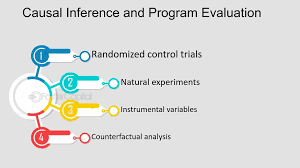
Training Course on Causal Inference in Social Protection Studies is meticulously designed to equip with the advanced theoretical insights and intensive practical tools necessary to excel in Causal Inference in Social Protection Studies. We will delve into the foundational concepts of causality and counterfactuals, master the intricacies of Randomized Controlled Trials (RCTs), and explore a wide array of robust Quasi-Experimental Designs (QEDs) from a causal inference perspective. A significant focus will be placed on hands-on application using statistical software (Stata, R, or Python), interpreting complex causal estimates, and effectively communicating findings to diverse audiences. By integrating industry best practices, analyzing real-world complex social protection datasets, and engaging in intensive practical exercises, attendees will develop the strategic acumen to confidently lead and implement rigorous causal studies, fostering unparalleled scientific credibility, policy relevance, and evidence-informed decision-making.
Course Objectives
Upon completion of this course, participants will be able to:
- Analyze the fundamental concepts of causality and the counterfactual in social protection studies.
- Comprehend the fundamental problem of causal inference and key threats to validity.
- Master the design and implementation principles of Randomized Controlled Trials (RCTs).
- Develop expertise in analyzing data and interpreting causal effects from RCTs.
- Formulate strategies for applying Difference-in-Differences (DiD) designs for causal inference.
- Understand the critical role of Propensity Score Matching (PSM) in constructing valid comparison groups.
- Implement robust approaches to Regression Discontinuity Design (RDD) for causal identification.
- Explore the use of Instrumental Variables (IV) to address endogeneity in social protection.
- Apply panel data methods (Fixed Effects, Random Effects) for causal inference.
- Understand and address common challenges and biases in causal inference studies.
- Develop preliminary skills in interpreting and communicating complex causal findings to policymakers.
- Design a comprehensive causal inference study plan for a social protection intervention.
- Examine global best practices and ethical considerations in causal inference for social protection.
Target Audience
This course is essential for professionals seeking to conduct or rigorously interpret causal studies in social protection:
- Researchers & Academics: Specializing in impact evaluation and social policy.
- M&E Specialists & Data Analysts: Responsible for rigorous impact assessments.
- Economists & Statisticians: Working on social protection policy and research.
- Social Protection Policymakers: Needing to understand and utilize causal evidence.
- Program Managers: Overseeing evidence-based social protection interventions.
- Government Officials: From planning, finance, and social welfare ministries.
- Development Practitioners: Requiring advanced analytical skills for evaluation.
- Students (Master's/PhD): Focusing on development economics, public policy, or social work.
Course Duration: 10 Days
Course Modules
Module 1: Foundations of Causality and the Counterfactual
- Define causality and its importance in social protection.
- Understand the concept of the counterfactual outcome.
- Discuss the fundamental problem of causal inference.
- Explore the potential outcomes framework.
- Differentiate between association and causation.
Module 2: Threats to Causal Inference
- Identify key threats to internal validity.
- Understand selection bias and its various forms.
- Discuss confounding variables and how they distort causal estimates.
- Explore other biases: attrition, Hawthorne effects, spillover.
- Learn strategies to minimize threats to validity
Module 3: Randomized Controlled Trials (RCTs): Design & Principles
- Master the principles of Randomized Controlled Trials (RCTs).
- Understand the role of random assignment in creating comparable groups.
- Differentiate between individual, cluster, and stepped-wedge randomization.
- Discuss ethical considerations in RCT design (e.g., withholding benefits).
- Explore practical challenges of implementing RCTs in social protection.
Module 4: RCTs: Analysis and Interpretation
- Develop expertise in analyzing data from RCTs.
- Learn to estimate Average Treatment Effects (ATE).
- Discuss methods for analyzing heterogeneous treatment effects.
- Understand the role of baseline data in improving precision.
- Interpret and present RCT findings robustly using statistical software.
Module 5: Quasi-Experimental Designs (QEDs): Introduction
- Comprehend when and why QEDs are used for causal inference.
- Discuss the strengths and limitations of QEDs compared to RCTs.
- Understand the core challenge of constructing a valid comparison group.
- Explore the concept of "as-if random" assignment.
- Introduce the major types of QEDs.
Module 6: Difference-in-Differences (DiD)
- Master the principles of the Difference-in-Differences (DiD) method.
- Understand the critical parallel trends assumption.
- Learn to implement DiD using regression analysis.
- Discuss methods for testing the parallel trends assumption.
- Analyze case studies of DiD applications in social protection.
Module 7: Propensity Score Matching (PSM)
- Develop expertise in Propensity Score Matching (PSM).
- Understand how propensity scores create comparable groups based on observables.
- Learn the steps: estimating scores, choosing matching algorithms, checking balance.
- Discuss the limitations of PSM (unobservable bias).
- Practice implementing PSM in statistical software.
Module 8: Regression Discontinuity Design (RDD)
- Implement robust approaches to Regression Discontinuity Design (RDD).
- Understand the sharp vs. fuzzy RDD distinction.
- Learn how RDD leverages a continuous eligibility criterion.
- Discuss estimation methods (e.g., local linear regression) and bandwidth selection.
- Analyze the strong causal inference properties of RDD.
Module 9: Instrumental Variables (IV) and Endogeneity
- Explore the concept of endogeneity and its implications for causal inference.
- Understand how Instrumental Variables (IV) can address endogeneity.
- Learn the assumptions required for valid IV estimation (relevance, exogeneity).
- Discuss Two-Stage Least Squares (2SLS) as an IV estimator.
- Identify potential instrumental variables in social protection contexts.
Module 10: Panel Data Methods for Causal Inference
- Apply panel data methods for causal inference in social protection.
- Understand Fixed Effects (FE) models for controlling time-invariant unobservables.
- Explore Random Effects (RE) models and the Hausman test.
- Discuss the advantages of panel data for addressing confounding.
- Practice implementing FE/RE models for causal questions.
Module 11: Advanced Topics and Robustness Checks
- Understand heterogeneous treatment effects and their estimation.
- Explore methods for sensitivity analysis and robustness checks.
- Discuss the role of qualitative data in strengthening causal inference.
- Learn about emerging methods (e.g., synthetic control, machine learning for causal inference).
- Address issues of external validity and generalizability.
Module 12: Practical Application, Ethical Considerations & Communication
- Conduct a comprehensive causal inference study using a real-world dataset.
- Analyze ethical dilemmas in causal inference studies (e.g., equity, privacy).
- Develop strategies for transparent and responsible data use.
- Learn to interpret and communicate complex causal findings to diverse audiences.
- Present a causal inference study plan for a social protection program.
Training Methodology
- Interactive Workshops: Facilitated discussions, group exercises, and problem-solving activities.
- Case Studies: Real-world examples to illustrate successful community-based surveillance practices.
- Role-Playing and Simulations: Practice engaging communities in surveillance activities.
- Expert Presentations: Insights from experienced public health professionals and community leaders.
- Group Projects: Collaborative development of community surveillance plans.
- Action Planning: Development of personalized action plans for implementing community-based surveillance.
- Digital Tools and Resources: Utilization of online platforms for collaboration and learning.
- Peer-to-Peer Learning: Sharing experiences and insights on community engagement.
- Post-Training Support: Access to online forums, mentorship, and continued learning resources.
Register as a group from 3 participants for a Discount
Send us an email: info@datastatresearch.org or call +254724527104
Certification
Upon successful completion of this training, participants will be issued with a globally recognized certificate.
Tailor-Made Course
We also offer tailor-made courses based on your needs.
Key Notes
- Participants must be conversant in English.
- Upon completion of training, participants will receive an Authorized Training Certificate.
- The course duration is flexible and can be modified to fit any number of days.
- Course fee includes facilitation, training materials, 2 coffee breaks, buffet lunch, and a Certificate upon successful completion.
- One-year post-training support, consultation, and coaching provided after the course.
- Payment should be made at least a week before the training commencement to DATASTAT CONSULTANCY LTD account, as indicated in the invoice, to enable better preparation.