Training Course on Artificial Intelligence for Speech Recognition
Training Course on Artificial Intelligence for Speech Recognition delves into crucial aspects like acoustic modeling, language modeling, and phonetics, equipping learners with the skills to develop, evaluate, and deploy robust voice recognition solutions.
Skills Covered
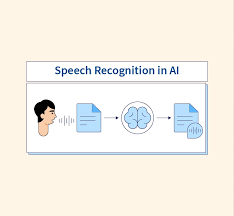
Course Overview
Training Course on Artificial Intelligence for Speech Recognition
Introduction
Artificial intelligence (AI) is revolutionizing how humans interact with technology, and speech recognition, a key application of AI, stands at the forefront of this transformation. This training course provides a comprehensive exploration of the principles, techniques, and practical applications of AI in speech processing. Participants will gain a deep understanding of the underlying machine learning algorithms, including deep learning architectures such as recurrent neural networks (RNNs) and transformers, that power modern speech recognition systems. The course delves into crucial aspects like acoustic modeling, language modeling, and phonetics, equipping learners with the skills to develop, evaluate, and deploy robust voice recognition solutions. By mastering these concepts, individuals and organizations can unlock the immense potential of voice technology to enhance efficiency, accessibility, and user experience across diverse industries.
This intensive program is designed to cater to a wide range of learners, from technical professionals seeking to specialize in AI for audio processing to business leaders aiming to leverage the power of conversational AI. Through a blend of theoretical knowledge and hands-on exercises, participants will learn to navigate the complexities of speech data, implement speech-to-text (STT) and text-to-speech (TTS) systems, and understand the ethical considerations surrounding natural language processing (NLP) applications in voice interfaces. Upon completion, attendees will be proficient in utilizing cutting-edge tools and methodologies to contribute to the rapidly evolving field of intelligent voice assistants and speech analytics.
Course Duration
5 days
Course Objectives
- Understand the fundamental principles of artificial intelligence and its application in speech recognition technology.
- Explore the core concepts of digital signal processing relevant to audio analysis.
- Gain in-depth knowledge of acoustic modeling techniques, including Hidden Markov Models (HMMs) and deep neural networks (DNNs).
- Master the principles of language modeling and the role of N-grams and neural language models.
- Learn about various feature extraction methods used in speech recognition, such as Mel-Frequency Cepstral Coefficients (MFCCs).
- Develop practical skills in building and training speech recognition models using industry-standard tools and machine learning frameworks.
- Evaluate the performance of speech recognition systems using relevant metrics and techniques for speech accuracy assessment.
- Understand the architecture and implementation of end-to-end speech recognition systems.
- Explore advanced topics in speech processing, including speaker recognition and voice biometrics.
- Learn about the challenges and solutions in handling noisy environments and accent variations in speech recognition.
- Investigate the integration of speech recognition with other AI applications, such as natural language understanding (NLU) and dialogue systems.
- Understand the ethical considerations and societal impact of voice AI and speech data privacy.
- Gain insights into the future trends and advancements in the field of conversational interfaces and voice-enabled technology.
Organizational Benefits
- Implement voice-enabled workflows to automate tasks, improve data entry accuracy, and streamline customer interactions.
- Develop intuitive and accessible voice interfaces for products and services, leading to higher customer satisfaction.
- Leverage speech analytics to extract valuable information from voice data, enabling better decision-making and personalized experiences.
- Stay at the forefront of technological advancements by integrating cutting-edge voice AI capabilities into offerings.
- Create more inclusive products and services by providing voice control options for individuals with disabilities.
- Automate customer service inquiries and other voice-based processes, leading to significant operational cost savings.
- : Explore and create innovative voice-based applications and services to tap into new market opportunities.
- Equip employees with voice-enabled tools to enhance their efficiency and focus on more complex tasks.
Target Audience
- Software Developers.
- Data Scientists.
- Machine Learning Engineers
- Product Managers
- UX/UI Designers.
- Business Analysts.
- Researchers
- IT Professionals
Course Outline
Module 1: Fundamentals of Artificial Intelligence and Speech
- Introduction to Artificial Intelligence: Concepts and Applications
- Overview of Speech Recognition: History, Evolution, and Applications
- Basic Concepts of Acoustics and Phonetics for Speech Processing
- Digital Representation of Speech Signals: Sampling, Quantization, and Framing
- Introduction to Key Machine Learning Concepts for Speech Recognition
Module 2: Digital Signal Processing for Audio Analysis
- Time-Domain and Frequency-Domain Analysis of Speech Signals
- Fourier Transform and its Application in Speech Processing
- Filtering Techniques for Noise Reduction in Audio
- Spectrogram Analysis and Interpretation of Speech Sounds
- Introduction to Audio Feature Extraction Techniques
Module 3: Acoustic Modeling in Speech Recognition
- Introduction to Acoustic Modeling: Mapping Speech to Phonemes
- Hidden Markov Models (HMMs): Principles and Applications in Speech
- Gaussian Mixture Models (GMMs) for Acoustic Feature Modeling
- Introduction to Deep Neural Networks (DNNs) for Acoustic Modeling
- Hybrid HMM-DNN Architectures in Modern Speech Recognition
Module 4: Language Modeling for Speech Recognition
- Introduction to Language Modeling: Predicting Word Sequences
- N-gram Language Models: Concepts, Estimation, and Smoothing Techniques
- Neural Language Models: Recurrent Neural Networks (RNNs) and LSTMs
- Transformer Networks for Language Modeling in Speech Recognition
- Integration of Acoustic and Language Models in Speech Decoding
Module 5: Feature Extraction Techniques
- Mel-Frequency Cepstral Coefficients (MFCCs): Extraction and Significance
- Perceptual Linear Prediction (PLP) and Linear Discriminant Analysis (LDA)
- Filter Bank Energies and Other Spectral Features
- Time-Domain Features: Energy, Zero-Crossing Rate, and Pitch
- Advanced Feature Extraction Techniques using Deep Learning
Module 6: Building and Training Speech Recognition Models
- Overview of Speech Data Collection and Annotation
- Data Preprocessing and Augmentation Techniques for Speech
- Training Deep Learning Models for Speech Recognition using TensorFlow and PyTorch
- Model Evaluation Metrics: Word Error Rate (WER) and Character Error Rate (CER)
- Strategies for Model Optimization and Hyperparameter Tuning
Module 7: Advanced Topics in Speech Processing
- Speaker Recognition: Verification and Identification Techniques
- Voice Biometrics: Applications and Security Considerations
- Handling Noisy Environments: Robust Speech Recognition Techniques
- Accent Adaptation and Cross-Lingual Speech Recognition
- Text-to-Speech (TTS) Synthesis: Principles and Methods
Module 8: Applications and Future Trends in Voice AI
- Integration of Speech Recognition with Natural Language Understanding (NLU)
- Building Conversational Agents and Dialogue Systems
- Applications of Speech Recognition in Various Industries (Healthcare, Automotive, etc.)
- Ethical Considerations and Societal Impact of Voice AI
- Future Trends and Research Directions in Speech Recognition Technology
Training Methodology
This training course will employ a blended learning approach, combining theoretical lectures with hands-on practical exercises. The methodology will include:
- Interactive Lectures: Engaging presentations covering the core concepts and principles of AI for speech recognition.
- Practical Lab Sessions: Hands-on exercises using industry-standard tools and datasets to build and evaluate speech recognition models.
- Case Studies: Real-world examples and applications of speech recognition technology across different domains.
- Group Discussions: Collaborative sessions to foster learning and exchange ideas among participants.
- Project-Based Learning: A final project where participants can apply their knowledge to develop a speech recognition system or solve a related problem.
- Access to Learning Resources: Comprehensive course materials, code repositories, and relevant research papers.
- Q&A Sessions: Dedicated time for participants to ask questions and clarify their understanding.
- Expert Instructors: Experienced professionals with deep knowledge in AI and speech processing.
Register as a group from 3 participants for a Discount
Send us an email: info@datastatresearch.org or call +254724527104
Certification
Upon successful completion of this training, participants will be issued with a globally- recognized certificate.
Tailor-Made Course
We also offer tailor-made courses based on your needs.
Key Notes
a. The participant must be conversant with English.
b. Upon completion of training the participant will be issued with an Authorized Training Certificate
c. Course duration is flexible and the contents can be modified to fit any number of days.
d. The course fee includes facilitation training materials, 2 coffee breaks, buffet lunch and A Certificate upon successful completion of Training.
e. One-year post-training support Consultation and Coaching provided after the course.
f. Payment should be done at least a week before commence of the training, to DATASTAT CONSULTANCY LTD account, as indicated in the invoice so as to enable us prepare better for you.