Russia's Role in Modern Geopolitics Training Course
Russia's Role in Modern Geopolitics Training Course goes beyond surface-level analysis, examining the intricate interplay between RussiaΓÇÖs domestic politics, its military modernization, and its use of hybrid warfare, disinformation campaigns, and energy as a geopolitical tool.
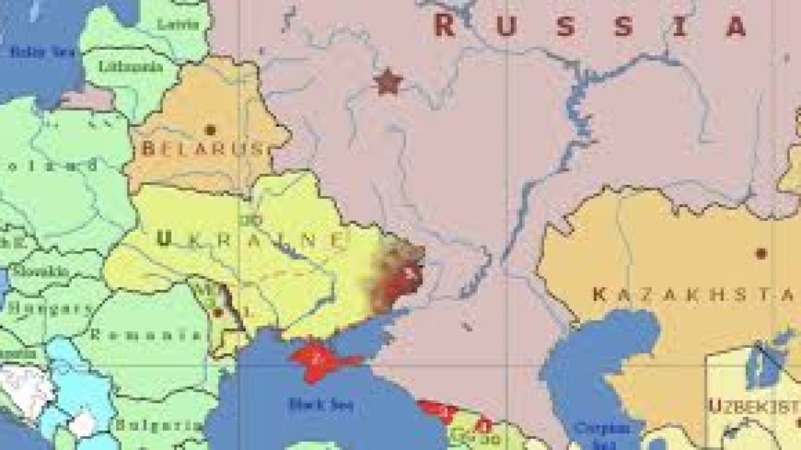
Course Overview
Russia's Role in Modern Geopolitics Training Course
Introduction
The modern world is defined by a complex web of interconnected political, economic, and security dynamics, with Russia emerging as a pivotal force shaping the global landscape. This comprehensive course delves into the historical legacies, strategic interests, and policy drivers that define Russia's contemporary geopolitical role. It provides a nuanced understanding of how Russia navigates its relationships with key international players, from its assertive posture toward the West to its deepening ties with China and its influence in the post-Soviet space and the Global South. By exploring the multifaceted dimensions of Russian foreign policy, participants will gain the analytical skills necessary to interpret current events, anticipate future trends, and formulate informed responses to a shifting world order.
Russia's Role in Modern Geopolitics Training Course goes beyond surface-level analysis, examining the intricate interplay between RussiaΓÇÖs domestic politics, its military modernization, and its use of hybrid warfare, disinformation campaigns, and energy as a geopolitical tool. Participants will engage with critical concepts like the "Russian World" doctrine, the Eurasian Economic Union, and the implications of the Ukraine conflict, providing them with a holistic perspective on Russia's strategic ambitions. The course is designed to equip professionals with actionable knowledge to make sense of the new era of great power competition and to navigate the complexities of international relations in a world increasingly influenced by Russia's strategic decisions.
Course Duration
5 days
Course Objectives
- Analyze the core principles and historical influences shaping RussiaΓÇÖs foreign policy and its pursuit of great power status.
- Assess Russia's use of disinformation, cyberattacks, and proxy forces as instruments of statecraft.
- Understand how Russia uses its vast energy resources as a strategic leverage in global markets and against key rivals.
- Explore Russia's continued influence and security interests in the post-Soviet space and its near-abroad.
- Investigate the deepening geopolitical alignment between Russia and China and its implications for the global balance of power.
- Identify the key internal and external factors that drive Russian decision-making, including domestic politics and security concerns.
- Understand the ideological underpinnings of RussiaΓÇÖs soft power and its support for Russian-speaking communities abroad.
- Examine RussiaΓÇÖs involvement in conflict zones like Ukraine, Syria, and the Sahel and its impact on regional stability.
- Evaluate the effectiveness and geopolitical consequences of international sanctions on the Russian economy.
- Analyze the modernization of the Russian Armed Forces and its role in projecting power and influence.
- Grasp RussiaΓÇÖs burgeoning strategic interests and competition in the Arctic and Indo-Pacific regions.
- Develop the capacity to anticipate Russian actions and formulate effective strategic and policy responses.
- Engage in critical discussion on the long-term trajectory of relations between Russia, the United States, and NATO.
Organizational Benefits
- Develop a deeper understanding of geopolitical risks and opportunities to inform business strategy, investment decisions, and long-term planning.
- Better anticipate and mitigate risks associated with Russian market exposure, supply chain vulnerabilities, and political instability.
- Equip leadership and teams with the knowledge to make confident decisions in a volatile global environment.
- Gain a distinct edge by understanding the geopolitical landscape and its impact on competitors, partners, and emerging markets.
- Enhance the ability of diplomatic and corporate representatives to engage with Russian entities and navigate complex international negotiations.
- Strengthen organizational security by understanding the nature of hybrid threats and state-sponsored cyber risks.
Target Audience
- Individuals working in foreign affairs, defense, and intelligence who need to understand Russian policy.
- Leaders involved in international trade, finance, and energy sectors with interests in Russian markets.
- Professionals assessing geopolitical risks, cybersecurity threats, and state-sponsored activities.
- Reporters and editors covering international news, conflicts, and global politics.
- Researchers, graduate students, and scholars of international relations, political science, and security studies.
- Staff of humanitarian and advocacy groups operating in Eastern Europe and Central Asia.
- Experts in oil, gas, and mining needing to understand Russia's role as a major energy producer.
- Military officers and intelligence analysts focused on Russian military capabilities and strategic intentions.
Course Outline
Module 1: Historical and Ideological Foundations of Russian Geopolitics
- Historical Legacy: Tracing the roots of Russian state identity from the Tsarist empire to the Soviet Union and its impact on contemporary strategic thinking.
- Eurasianism: Exploring the core tenets of Eurasianism and its influence on Russia's concept of a distinct civilizational sphere.
- Geographical Determinism: Analyzing how Russia's vast geography, including its lack of warm-water ports, has shaped its security-focused foreign policy.
- Ideological Drivers: Understanding the blend of historical resentment, great power ambition, and a perceived "moral exceptionalism" that fuels Russian policy.
- Case Study: The Annexation of Crimea (2014) - Examining how historical grievances and geopolitical calculations were used to justify territorial expansion and test international norms.
Module 2: The Post-Soviet Space: Russia's Near-Abroad
- Sphere of Influence: Assessing RussiaΓÇÖs continued efforts to maintain and expand its influence over former Soviet republics.
- Security Alliances: Examining the role of the Collective Security Treaty Organization (CSTO) and other Russia-led security blocs.
- Economic Integration: The formation and challenges of the Eurasian Economic Union (EAEU) as a counterbalance to Western economic influence.
- Frozen Conflicts: Analyzing the dynamics of "frozen conflicts" in regions like Transnistria, Abkhazia, and South Ossetia as a tool for political leverage.
- Case Study: The War in Georgia (2008) - A deep dive into how Russia used military intervention to assert its authority and prevent Georgia's NATO integration.
Module 3: Energy and Economic Geopolitics
- Energy Superpower.
- Pipeline Politics: Analyzing the geopolitical implications of major energy infrastructure projects, such as Nord Stream 2 and Power of Siberia.
- Economic Sanctions: Evaluating the impact of Western sanctions on the Russian economy and its attempts to pivot to non-Western markets.
- Sovereign Wealth: Investigating the role of Russia's national wealth fund and its strategy to insulate the economy from external shocks.
- Case Study: The European Gas Crisis (2022) - Exploring how RussiaΓÇÖs manipulation of gas supplies was used as a geopolitical weapon in response to sanctions.
Module 4: Hybrid Warfare and Information Operations
- Defining Hybrid Warfare: Deconstructing the concept of hybrid warfare and its application in contemporary Russian strategy.
- Cyber Warfare.
- Disinformation Campaigns.
- Proxy Forces.
- Case Study: The U.S. Presidential Election (2016) - A detailed examination of alleged Russian interference and its impact on democratic processes.
Module 5: Russia's Role in Global Conflicts
- Syria Intervention.
- African Engagement: Exploring Russia's expanding military, political, and economic footprint in Africa, particularly through arms deals and PMCs.
- Arctic Competition.
- Venezuela and Latin America.
- Case Study: The Second Libyan Civil War - Analyzing Russia's support for General Haftar's forces and its strategy to secure a foothold in North Africa.
Module 6: Russia's Military and Nuclear Doctrine
- Military Modernization.
- Nuclear Posture.
- Strategic Exercises.
- Non-Proliferation.
- Case Study: The Russia-Ukraine War (2022-present) - A deep dive into the operational successes and failures of the Russian military and the strategic lessons learned from the conflict.
Module 7: The China-Russia Strategic Partnership
- Shared Interests.
- Economic and Military Cooperation.
- Belt and Road Initiative.
- Points of Divergence.
- Case Study: The "No Limits" Partnership Declaration (2022) - Examining the substance and symbolism of the joint statement and its implications for global politics.
Module 8: Future Scenarios and Global Implications
- Future Trajectories: Developing and debating different scenarios for Russia's future geopolitical role, from continued confrontation to potential rapprochement with the West.
- Internal Dynamics: Assessing the influence of domestic political stability, economic reforms, and leadership succession on RussiaΓÇÖs foreign policy.
- Global Impact.
- Policy Recommendations.
- Case Study: The Future of NATO - A discussion on how RussiaΓÇÖs actions have reshaped the alliance, led to the accession of new members (e.g., Finland, Sweden), and revitalized its sense of purpose.
Training Methodology
This course employs a blended learning approach to maximize engagement and knowledge retention. Methods include:
- Expert-Led Lectures: Delivered by seasoned academics, former diplomats, and intelligence professionals.
- Interactive Seminars: Facilitated group discussions to critically analyze complex topics and share insights.
- Case Study Analysis: Detailed examination of real-world events to apply theoretical concepts to practical situations.
- Simulations and Role-Playing: Engaging participants in geopolitical scenarios to develop strategic thinking and decision-making skills under pressure.
- Guest Speaker Sessions: Q&A sessions with leading experts and policymakers.
- Required Readings and Resource Hub: Access to curated articles, reports, and academic papers for in-depth study.
Register as a group from 3 participants for a Discount
Send us an email: info@datastatresearch.org or call +254724527104
Certification
Upon successful completion of this training, participants will be issued with a globally- recognized certificate.
Tailor-Made Course
We also offer tailor-made courses based on your needs.
Key Notes
a. The participant must be conversant with English.
b. Upon completion of training the participant will be issued with an Authorized Training Certificate
c. Course duration is flexible and the contents can be modified to fit any number of days.
d. The course fee includes facilitation training materials, 2 coffee breaks, buffet lunch and A Certificate upon successful completion of Training.
e. One-year post-training support Consultation and Coaching provided after the course.
f. Payment should be done at least a week before commence of the training, to DATASTAT CONSULTANCY LTD account, as indicated in the invoice so as to enable us prepare better for you.