One Health Approach to Disease Prevention and Control Training Course
One Health Approach to Disease Prevention and Control Training Course equips participants with advanced knowledge on the intersection between human health, animal health, and environmental health, emphasizing coordinated, interdisciplinary, and multi sectoral collaboration.
Course Overview
One Health Approach to Disease Prevention and Control Training Course
Introduction
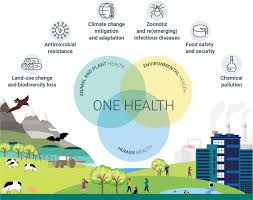
The One Health Approach has become a critical global framework for tackling emerging and re-emerging infectious diseases, antimicrobial resistance (AMR), zoonotic spillover, environmental degradation, and public health threats driven by climate change. One Health Approach to Disease Prevention and Control Training Course equips participants with advanced knowledge on the intersection between human health, animal health, and environmental health, emphasizing coordinated, interdisciplinary, and multisectoral collaboration. Participants will explore the drivers of zoonotic disease outbreaks, ecosystem disruptions, livestock health management, wildlife surveillance, vector ecology, and environmental determinants of disease transmission.
Grounded in WHO, FAO, OIE/WOAH, and UNEP One Health frameworks, this program integrates cutting-edge concepts such as digital disease surveillance, climate-smart health strategies, AMR stewardship, biosurveillance, risk assessment, pandemic preparedness, and integrated health policy development. Real-world case studies—including Ebola, COVID-19, Rift Valley Fever, Avian Influenza, and AMR outbreaks—guide participants in designing robust One Health interventions. Upon completion, participants will be fully prepared to lead cross-sectoral initiatives that enhance community resilience and strengthen global health security.
Course Duration
10 days
Course Objectives
1. Understand the principles, frameworks, and global importance of the One Health Approach.
2. Analyze human–animal–environment interactions driving disease emergence.
3. Apply One Health strategies for zoonotic disease prevention and control.
4. Conduct multisectoral outbreak investigation and response.
5. Use GIS, digital surveillance tools, and early warning systems for disease monitoring.
6. Strengthen AMR surveillance and antimicrobial stewardship programs.
7. Implement climate-smart and ecosystem-friendly health interventions.
8. Conduct risk assessment and vulnerability analysis for emerging diseases.
9. Strengthen cross-sectoral coordination among health, livestock, and environmental agencies.
10. Develop One Health policies, guidelines, and strategic frameworks.
11. Apply M&E tools for integrated health programs.
12. Enhance community engagement and risk communication in disease control.
13. Develop proposals for One Health programs and global health security funding.
Organizational Benefits
- Enhanced disease detection and rapid response capacity.
- Reduced outbreak-related losses in communities and livestock systems.
- Improved collaboration between public health, veterinary, and environmental teams.
- Access to stronger evidence-based decision-making tools.
- Better AMR management and reduced antimicrobial misuse.
- Strengthened climate resilience in health programming.
- Improved community engagement and trust-building.
- Expanded donor funding opportunities for One Health activities.
- Reduced operational risks linked to zoonotic and environmental hazards.
- Increased institutional visibility in global health and disease prevention initiatives.
Target Audience
- Public health officers and epidemiologists
- Veterinary officers and animal health professionals
- Environmental health practitioners
- One Health program coordinators
- Wildlife and ecosystem researchers
- Medical officers, nurses, and clinical practitioners
- NGO and humanitarian program staff
- Disaster risk management and emergency response teams
- Policy makers and government officials
Course Modules
Module 1: Foundations of the One Health Approach
1. Principles and pillars of One Health
2. Historical evolution
3. Global One Health frameworks (WHO, FAO, OIE/WOAH)
4. Multisectoral collaboration
5. Case Study: One Health response to the Ebola outbreak in West Africa
Module 2: Zoonotic Diseases and Spillover Dynamics
1. High-impact zoonoses
2. Spillover mechanisms
3. Animal reservoirs and vectors
4. Human behaviors affecting spillover
5. Case Study: Nipah virus spillover in Bangladesh
Module 3: Disease Ecology and Environmental Health
1. Ecological drivers of diseases
2. Habitat destruction and biodiversity loss
3. Environmental pollutants
4. Water, sanitation, and hygiene (WASH)
5. Case Study: Rift Valley Fever outbreaks linked to rainfall patterns
Module 4: Surveillance Systems in One Health
1. Joint surveillance frameworks
2. Digital surveillance tools
3. Community-based monitoring
4. Data integration across sectors
5. Case Study: Integrated surveillance system in Tanzania (Zoonotic Disease Unit)
Module 5: Outbreak Investigation and Response
1. Multisectoral outbreak investigation steps
2. Sample collection and laboratory confirmation
3. Contact tracing
4. Response coordination
5. Case Study: Avian Influenza outbreaks in Asia
Module 6: AMR and Antimicrobial Stewardship
1. Drivers of AMR
2. AMR surveillance systems
3. Antimicrobial use in animals and humans
4. Stewardship programs
5. Case Study: AMR containment strategy in Kenya
Module 7: Climate Change and Infectious Disease Patterns
1. Climate-sensitive diseases
2. Environmental stressors
3. Predictive modeling
4. Adaptation and mitigation strategies
5. Case Study: Malaria pattern changes in East Africa due to warming temperatures
Module 8: One Health in Food Safety and Livestock Systems
1. Foodborne pathogens
2. Safe livestock production
3. Slaughterhouse hygiene
4. Farm-to-fork safety
5. Case Study: One Health approach in controlling Salmonella in poultry farms
Module 9: Wildlife Health and Ecosystem Surveillance
1. Wildlife reservoirs
2. Biodiversity monitoring
3. Emerging wildlife pathogens
4. Human–wildlife conflict and disease risk
5. Case Study: Marburg virus detection in bat colonies
Module 10: One Health Risk Assessment
1. Hazard identification
2. Exposure assessment
3. Risk characterization
4. Decision-making tools
5. Case Study: Risk assessment for zoonotic TB transmission
Module 11: Vector Control and Environmental Management
1. Vector ecology
2. Integrated vector management
3. Chemical and biological control
4. Environmental interventions
5. Case Study: Vector control in controlling Leishmaniasis in Sudan
Module 12: Community Engagement and Risk Communication
1. Behavior change strategies
2. Communication frameworks
3. Engaging community health workers
4. Addressing misinformation
5. Case Study: Risk communication during COVID-19
Module 13: One Health Policy and Governance
1. National One Health strategies
2. Policy development processes
3. Regulatory frameworks
4. Cross-border collaboration
5. Case Study: Implementation of Kenya’s One Health Strategy
Module 14: Monitoring, Evaluation & Learning for One Health Programs
1. M&E frameworks
2. Indicator development
3. Program evaluation
4. Reporting and documentation
5. Case Study: Evaluation of AMR programs in Uganda
Module 15: Resource Mobilization & Proposal Writing
1. Donor landscape for One Health
2. Writing competitive proposals
3. Integrating sustainability
4. Budgeting and planning
5. Case Study: Successful One Health grant for community surveillance in Ethiopia
Training Methodology
This course employs a participatory and hands-on approach to ensure practical learning, including:
- Interactive lectures and presentations.
- Group discussions and brainstorming sessions.
- Hands-on exercises using real-world datasets.
- Role-playing and scenario-based simulations.
- Analysis of case studies to bridge theory and practice.
- Peer-to-peer learning and networking.
- Expert-led Q&A sessions.
- Continuous feedback and personalized guidance.
Register as a group from 3 participants for a Discount
Send us an email: info@datastatresearch.org or call +254724527104
Certification
Upon successful completion of this training, participants will be issued with a globally- recognized certificate.
Tailor-Made Course
We also offer tailor-made courses based on your needs.
Key Notes
a. The participant must be conversant with English.
b. Upon completion of training the participant will be issued with an Authorized Training Certificate
c. Course duration is flexible and the contents can be modified to fit any number of days.
d. The course fee includes facilitation training materials, 2 coffee breaks, buffet lunch and A Certificate upon successful completion of Training.
e. One-year post-training support Consultation and Coaching provided after the course.
f. Payment should be done at least a week before commence of the training, to DATASTAT CONSULTANCY LTD account, as indicated in the invoice so as to enable us prepare better for you.