CSV/Flat-File and ETL Loading to ERP Systems Training Course
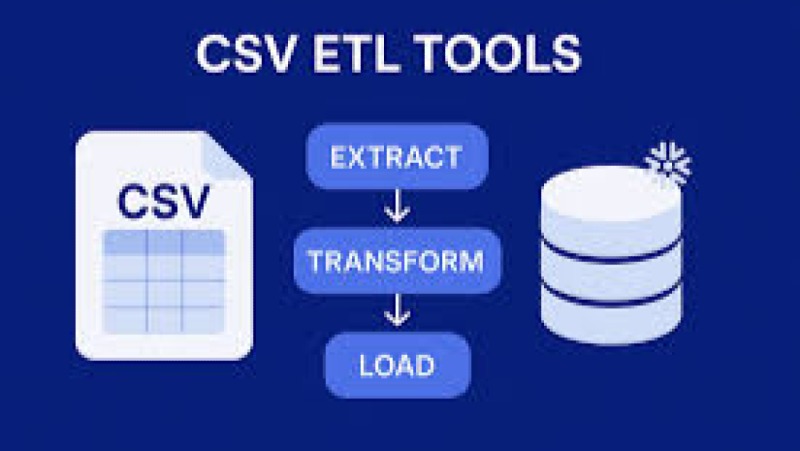
CSV/Flat-File and ETL Loading to ERP Systems Training Course is designed to transform IT professionals and power-users into Data Loading Specialists who can confidently manage the complete Data Pipeline lifecycle.
Course Overview
CSV/Flat-File and ETL Loading to ERP Systems Training Course
Introduction
The digital enterprise today relies on accurate, timely, and integrated data to power core operations, from supply chain management to financial reporting. Enterprise Resource Planning (ERP) systems are the backbone of this data-driven environment, but their value is only as good as the data fed into them. This is where mastering Data Integration, particularly through Extract, Transform, Load (ETL) processes for common formats like CSV and Flat Files, becomes a critical, in-demand skill. In an era dominated by Big Data, Cloud-Native solutions, and strict Data Governance mandates (like GDPR/CCPA), the efficient, error-free loading of historical and transactional data is no longer a technical task it is a strategic necessity for Digital Transformation. This course moves beyond legacy batch processing, focusing on modern ETL/ELT methodologies, Data Quality enforcement, Incremental Loading, and the use of cutting-edge tools to ensure data integrity and maximize the ROI of your ERP investment.
CSV/Flat-File and ETL Loading to ERP Systems Training Course is designed to transform IT professionals and power-users into Data Loading Specialists who can confidently manage the complete Data Pipeline lifecycle. Participants will gain hands-on experience in tackling the real-world complexities of schema drift, inconsistent formatting, and high-volume data movement that often plague ERP implementations and upgrades. By combining foundational knowledge of Data Warehousing concepts with practical application of modern ETL tools and techniques like Python Scripting for data preparation, participants will be equipped to architect scalable and auditable data flows. The ultimate goal is to bridge the gap between disparate data sources and the structured requirements of target ERP platforms, delivering analytics-ready data that drives superior Business Intelligence and operational efficiency.
Course Duration
5 days
Course Objectives
Upon completion of this course, participants will be able to:
- Architect and design scalable ETL/ELT pipelines specifically for ERP system integration.
- Master the extraction of data from diverse Flat-File and CSV formats, handling encoding and delimiter issues.
- Implement advanced Data Cleansing and Data Validation routines to ensure high Data Quality prior to loading.
- Apply Schema Mapping and Data Transformation techniques to align source data with target ERP data models.
- Execute both Full Load and Incremental Loading strategies for performance optimization and minimal downtime.
- Utilize modern Cloud-Native ETL Tools for high-volume data ingestion.
- Develop robust Error Handling and Monitoring mechanisms for continuous ETL pipeline assurance.
- Implement Data Governance and Audit Trails to ensure Regulatory Compliance (e.g., SOX, GDPR).
- Apply Python Scripting for complex, custom data manipulation and preprocessing tasks.
- Understand the fundamentals of ERP Data Structures and their loading dependencies.
- Troubleshoot common Schema Drift and Data Integrity challenges encountered during system migrations.
- Leverage Change Data Capture (CDC) concepts for near Real-Time Data Integration into the ERP.
- Optimize data loading jobs for Performance Tuning to handle Big Data volumes efficiently.
Target Audience
- ETL Developers and Data Engineers
- ERP Implementation Consultants
- Data Analysts and Business Intelligence Specialists
- Database Administrators (DBAs)
- IT System Architects responsible for data flow design
- Data Governance and Data Quality Professionals
- Data Conversion Specialists managing system migrations
- Power Users or Business Process Owners responsible for data uploads
Course Modules
Modules (8 with 5 Key Bullets + Case Study Focus)
Module 1: Foundations of Data Integration and ERP Systems
- Understanding ETL and ELT Architectures and their role in ERP.
- ERP Data Landscape
- Principles of Data Quality and the cost of poor data in an ERP.
- Introduction to the Data Pipeline Lifecycle
- The role of Metadata Management and Data Lineage in complex integration.
- Case Study: Mapping source system data requirements to a SAP S/4HANA or Oracle Fusion Cloud data template.
Module 2: Extraction from Flat Files and CSV
- Handling diverse file formats.
- Techniques for robust file parsing, including Encoding and Quoting rules.
- Identifying and resolving common extraction issues
- Leveraging SFTP/Cloud Storage Connectors for secure and automated file retrieval.
- Strategies for handling Big Data volumes of flat files
- Case Study: Building a file monitoring and extraction job using an ETL tool for a retail POS system's daily sales reports.
Module 3: Advanced Data Transformation and Cleansing
- Implementing Data Standardization
- Data Deduplication techniques and Fuzzy Matching for Master Data records.
- Data Enrichment
- Applying complex business rules and Data Validation
- Using Python Pandas for high-performance, non-standard data preprocessing.
- Case Study: Cleansing and transforming a raw CSV customer list, standardizing addresses and de-duplicating records before loading to a Dynamics 365 CRM module.
Module 4: ERP-Specific Loading Strategies
- Understanding ERP Loading APIs
- Implementing Transaction Management and ensuring Data Integrity during the load phase.
- Designing and executing Incremental Loading and Full Reload strategies.
- Handling Dependencies between Master Data and Transactional Data loads
- Managing Rejected Records and implementing a proper Quarantine/Error Logging system.
- Case Study: Developing an incremental load pipeline for daily financial journals into a target ERP's General Ledger interface table, handling immediate rejections.
Module 5: ETL Tooling and Cloud-Native Solutions
- Hands-on with leading ETL/Data Integration tools
- Introduction to Cloud-Native ELT platforms
- Working with Staging Areas as intermediaries for transformation.
- Workflow Orchestration using tools like Apache Airflow or native cloud schedulers.
- Comparing and contrasting GUI-based and Code-based ETL/ELT development.
- Case Study: Using a Cloud ETL service to ingest data from an S3/Blob storage CSV file, transform it, and load it into an AWS Redshift or Snowflake target for the ERP's reporting layer.
Module 6: Data Governance, Auditing, and Compliance
- Establishing Data Lineage documentation from source file to final ERP table.
- Implementing Security Best Practices for sensitive flat files.
- Designing Audit Trails to track all changes, users, and timestamps during the ETL process.
- Enforcing Regulatory Compliance
- Building Data Quality Scorecards and automated reports for compliance checks.
- Case Study: Implementing a PII masking routine on a customer CSV file before it is loaded into the pre-production ERP environment.
Module 7: Performance Tuning and Scalability
- Optimizing extraction for large files: Parallel reading and multi-threading techniques.
- Techniques for accelerating the Transformation phase
- Bulk Loading methods into target databases/APIs for maximum throughput.
- Implementing Partitioning and Indexing strategies in the staging environment.
- Monitoring ETL job performance using Metrics and setting up Alerting for bottlenecks.
- Case Study: Refactoring a slow-running batch ETL job for a historical data migration to achieve a 50% reduction in processing time.
Module 8: Project Deployment and Advanced Topics
- Best practices for Code Version Control (Git) and CI/CD for ETL pipelines.
- Strategies for moving ETL jobs from Development to Testing and Production environments.
- Introduction to Change Data Capture for high-frequency updates.
- Handling Schema Drift
- Designing a complete, resilient ERP Data Migration Plan from Flat Files.
- Case Study: Simulating a Go-Live scenario where participants deploy a fully tested data loading script and monitor its performance in a parallel test environment.
Training Methodology
This course employs a participatory and hands-on approach to ensure practical learning, including:
- Interactive lectures and presentations.
- Group discussions and brainstorming sessions.
- Hands-on exercises using real-world datasets.
- Role-playing and scenario-based simulations.
- Analysis of case studies to bridge theory and practice.
- Peer-to-peer learning and networking.
- Expert-led Q&A sessions.
- Continuous feedback and personalized guidance.
Register as a group from 3 participants for a Discount
Send us an email: info@datastatresearch.org or call +254724527104
Certification
Upon successful completion of this training, participants will be issued with a globally- recognized certificate.
Tailor-Made Course
We also offer tailor-made courses based on your needs.
Key Notes
a. The participant must be conversant with English.
b. Upon completion of training the participant will be issued with an Authorized Training Certificate
c. Course duration is flexible and the contents can be modified to fit any number of days.
d. The course fee includes facilitation training materials, 2 coffee breaks, buffet lunch and A Certificate upon successful completion of Training.
e. One-year post-training support Consultation and Coaching provided after the course.
f. Payment should be done at least a week before commence of the training, to DATASTAT CONSULTANCY LTD account, as indicated in the invoice so as to enable us prepare better for you.