Big Data in Agriculture for Sustainable Development Training Course
Big Data in Agriculture for Sustainable Development Training Course is designed to equip agricultural professionals, data analysts, policymakers, and technologists with the tools and insights needed to harness big data for precision farming, climate-smart agriculture, and sustainable resource management.
Skills Covered
Course Overview
Big Data in Agriculture for Sustainable Development Training Course
Introduction
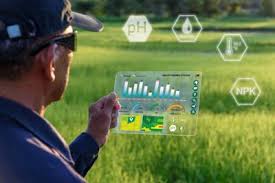
The rise of Big Data in agriculture marks a revolutionary shift in how we manage food systems, optimize yields, and ensure environmental sustainability. Big Data in Agriculture for Sustainable Development Training Course is designed to equip agricultural professionals, data analysts, policymakers, and technologists with the tools and insights needed to harness big data for precision farming, climate-smart agriculture, and sustainable resource management. By leveraging cutting-edge technologies such as IoT, remote sensing, machine learning, and GIS mapping, participants will gain hands-on knowledge on how to drive productivity and sustainability in agricultural practices across the globe.
Through interactive modules, real-world case studies, and expert-led instruction, this course explores the intersection of data science and agriculture to address global food security challenges. Whether you're focused on crop yield forecasting, soil health monitoring, pest management, or agri-finance, this training will empower you with data-driven decision-making skills. Join us to explore how Big Data analytics, coupled with AI, can revolutionize sustainable agriculture for the future.
Course Objectives
- Understand the fundamentals of Big Data analytics in agriculture.
- Explore IoT and sensor technologies for smart farming.
- Analyze real-time climate and weather data for crop planning.
- Utilize remote sensing for soil and crop monitoring.
- Apply AI and machine learning for yield prediction and risk assessment.
- Examine the role of data visualization in agri-decision-making.
- Assess blockchain applications for food traceability and supply chain.
- Investigate the impact of big data on sustainable development goals (SDGs).
- Build data-driven strategies for climate-smart agriculture.
- Understand geospatial data and mapping for precision agriculture.
- Evaluate agro-fintech innovations using big data.
- Learn how to manage agricultural big data infrastructure effectively.
- Foster cross-sector collaboration in digital agriculture ecosystems.
Target Audience
- Agricultural scientists and researchers
- Farm managers and agribusiness professionals
- Government and policy advisors
- Environmental sustainability experts
- Data analysts and data scientists
- Agritech startup founders and entrepreneurs
- Students in agriculture and data science
- NGOs and development organizations
Course Duration: 5 days
Course Modules
Module 1: Introduction to Big Data in Agriculture
- Definition and scope of Big Data in agriculture
- Importance for food security and sustainability
- Key technologies driving digital agriculture
- Examples of data-driven farm solutions
- Barriers and opportunities in adoption
- Case Study: Digital Green’s use of data in rural India
Module 2: Precision Farming with IoT and Sensors
- IoT devices and data collection in the field
- Smart irrigation and water management
- Livestock monitoring and health
- Real-time data for decision-making
- Integration with mobile applications
- Case Study: IoT-based SmartFarmNet in the Netherlands
Module 3: Remote Sensing and GIS for Agriculture
- Satellite imagery for crop and soil mapping
- Use of drones in data collection
- GIS platforms and tools
- Monitoring crop health over time
- Data fusion for multi-layer analysis
- Case Study: NASA Harvest Program in Sub-Saharan Africa
Module 4: Climate and Weather Data Analysis
- Importance of weather data in farming
- Predictive analytics for climate risks
- Seasonal forecasting and its impact
- Tools for agro-climate modeling
- Adapting farming to climate change
- Case Study: Climate Corporation’s FieldView Platform
Module 5: Machine Learning & AI in Crop Management
- Role of ML in predicting crop yields
- Disease and pest detection using AI
- Smart recommendations for inputs
- Automating decision-making processes
- Data annotation and model training
- Case Study: PEAT’s Plantix AI app for crop diagnostics
Module 6: Blockchain & Big Data for Food Traceability
- Introduction to blockchain in agriculture
- Ensuring transparency in supply chains
- Data sharing and traceability systems
- Smart contracts for agri-trade
- Reducing fraud and improving trust
- Case Study: IBM Food Trust and Walmart’s produce tracking
Module 7: Data-Driven Agri-Fintech and Rural Development
- Financing challenges for smallholder farmers
- Risk assessment using big data
- Insurance models based on farm data
- Mobile banking and digital wallets
- Data-based credit scoring systems
- Case Study: Hello Tractor’s pay-as-you-go tractor financing
Module 8: Policy, Ethics, and Future Trends
- Data privacy and ownership in agriculture
- Ethical use of AI and automation
- Regulatory frameworks for agri-data
- Building resilient agri-data ecosystems
- Scaling innovations globally
- Case Study: FAO’s agri-digital transformation frameworks
Training Methodology
- Interactive expert-led lectures
- Hands-on data analysis using real datasets
- Breakout discussions and group problem-solving
- Simulation-based learning using agri-tech tools
- Practical assignments and quizzes
- Capstone project with feedback from mentors
Register as a group from 3 participants for a Discount
Send us an email: info@datastatresearch.org or call +254724527104
Certification
Upon successful completion of this training, participants will be issued with a globally- recognized certificate.
Tailor-Made Course
We also offer tailor-made courses based on your needs.
Key Notes
a. The participant must be conversant with English.
b. Upon completion of training the participant will be issued with an Authorized Training Certificate
c. Course duration is flexible and the contents can be modified to fit any number of days.
d. The course fee includes facilitation training materials, 2 coffee breaks, buffet lunch and A Certificate upon successful completion of Training.
e. One-year post-training support Consultation and Coaching provided after the course.
f. Payment should be done at least a week before commence of the training, to DATASTAT CONSULTANCY LTD account, as indicated in the invoice so as to enable us prepare better for you.