Advanced Trace Evidence Analysis Training Course
Advanced Trace Evidence Analysis Training Course is meticulously crafted to deliver cutting-edge knowledge in microscopic forensic investigation, material identification, cross-transfer analysis, and instrumental trace analysis techniques to help professionals elevate their evidentiary interpretation capabilities.
Course Overview
Advanced Trace Evidence Analysis Training Course
Introduction
In today’s complex forensic landscape, Advanced Trace Evidence Analysis has emerged as a pivotal technique in criminal investigations and legal proceedings. As crime scenes become more intricate and forensic expectations intensify, law enforcement, forensic scientists, and legal professionals must stay ahead with expert-level trace analysis skills. Advanced Trace Evidence Analysis Training Course is meticulously crafted to deliver cutting-edge knowledge in microscopic forensic investigation, material identification, cross-transfer analysis, and instrumental trace analysis techniques to help professionals elevate their evidentiary interpretation capabilities.
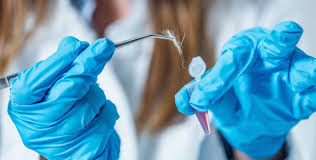
This hands-on training blends theoretical frameworks with practical applications to enable participants to extract actionable intelligence from trace materials such as fibers, glass, paints, gunshot residues, hair, and soil evidence. Anchored in real-world case studies, industry-aligned techniques, and emerging technologies, this course empowers forensic professionals to strengthen their chain of custody procedures, improve report writing, and enhance courtroom presentation skills for expert testimony.
Training Objectives
By the end of this course, participants will be able to:
- Master advanced microscopic and spectroscopic methods for trace analysis.
- Utilize FTIR, SEM-EDS, GC-MS, and Raman spectroscopy for material identification.
- Analyze trace materials in multi-evidence crime scenes.
- Improve accuracy in cross-transfer and persistence studies.
- Apply AI-based analytics and forensic imaging tools.
- Enhance proficiency in crime scene reconstruction using trace evidence.
- Evaluate trace evidence using quantitative and comparative approaches.
- Strengthen skills in expert report preparation and courtroom testimony.
- Understand emerging contaminants and their forensic implications.
- Identify polymer, particulate, and elemental analysis techniques.
- Develop expertise in advanced hair, fiber, and paint analysis.
- Ensure best practices in evidence preservation and contamination control.
- Integrate digital forensics with trace evidence for a holistic investigative approach.
Target Audience
- Forensic Scientists
- Crime Scene Investigators
- Law Enforcement Officers
- Criminal Justice Students
- Laboratory Technicians
- Legal and Judicial Professionals
- Private Investigators
- Homeland Security and Intelligence Analysts
Course Duration: 10 days
Course Modules
Module 1: Fundamentals of Trace Evidence Analysis
- Principles and history of trace evidence
- Classification and types of trace materials
- Importance in forensic investigations
- Roles and responsibilities of analysts
- Common trace evidence misconceptions
- Case Study: The Wayne Williams case and fiber evidence impact
Module 2: Hair and Fiber Analysis
- Morphological features of hair
- Synthetic vs. natural fibers
- Polarized light microscopy techniques
- Comparison microscopy for hair
- Limitations in hair/fiber identification
- Case Study: FBI Hair Comparison Review Project
Module 3: Paint and Coating Analysis
- Automotive and architectural paints
- Layer sequence analysis
- Pyrolysis-GC-MS for binders
- FTIR spectroscopy in coatings
- Cross-section preparation
- Case Study: The Ennis Cosby murder investigation
Module 4: Glass and Soil Evidence
- Refractive index determination
- Density gradient column usage
- Color and elemental analysis
- Soil composition differentiation
- Collection and storage best practices
- Case Study: Oklahoma bombing glass fracture analysis
Module 5: Gunshot Residue (GSR) Analysis
- SEM-EDS techniques for GSR
- Collection swab techniques
- Lead, barium, and antimony detection
- GSR persistence and contamination
- Interpretation challenges in GSR
- Case Study: Washington D.C. sniper investigation
Module 6: Explosives and Fire Debris
- Chemical profiling of residues
- Headspace GC-MS in fire debris
- Identification of accelerants
- Detection of homemade explosives
- Chain of custody in fire/explosive cases
- Case Study: Madrid train bombing forensic response
Module 7: Biological Trace Evidence
- Transfer of epithelial cells and touch DNA
- Trace blood analysis
- Use of luminol and BlueStar
- Contamination risks in biological trace evidence
- Differentiating contact vs. transfer
- Case Study: Amanda Knox case DNA trace issues
Module 8: Emerging Instrumental Techniques
- Raman spectroscopy in trace identification
- Time-of-flight mass spectrometry (TOF-MS)
- X-ray diffraction for inorganic materials
- AI and machine learning in trace evaluation
- Infrared imaging and hyperspectral analysis
- Case Study: Analytical challenges in the Anthrax letters
Module 9: Trace Evidence in Sexual Assault Cases
- Detection and preservation of micro-traces
- Importance of clothing examination
- Comparison of hair/fiber in sexual crimes
- Use of UV light and alternate light sources
- Biological and textile trace interplay
- Case Study: UK Operation Yewtree forensic investigation
Module 10: Trace Evidence and Cold Cases
- Re-examining archived trace evidence
- Technological advancements aiding cold cases
- Importance of proper evidence storage
- Leveraging databases for fiber/glass
- Statistical models in cold case resolution
- Case Study: The Golden State Killer DNA-trace evolution
Module 11: Cross-Transfer Analysis Techniques
- Two-way transfer principle
- Factors affecting persistence and loss
- Experimental design for transfer studies
- Fiber and particulate correlation methods
- Controlling secondary transfer risk
- Case Study: Locard’s principle and the Soham murders
Module 12: Legal Considerations and Courtroom Testimony
- Frye and Daubert standards
- Preparing expert witness testimony
- Presenting complex trace data to juries
- Cross-examination readiness
- Documentation and legal report formatting
- Case Study: CSI Effect and the Casey Anthony trial
Module 13: Digital and Trace Evidence Integration
- Combining cyber-forensic and trace materials
- Evidence correlation using timelines
- Location-based digital data for context
- Smartphones and trace collection contamination
- Chain of custody in hybrid investigations
- Case Study: Boston Marathon bombing investigation
Module 14: Quality Assurance and Lab Accreditation
- ISO/IEC 17025 standards
- Internal and external auditing
- Proficiency testing for trace labs
- Documentation and case file review
- Error analysis and corrective actions
- Case Study: Houston Forensic Science Center improvements
Module 15: Capstone Module - Integrated Case Analysis
- Multi-trace case reconstruction
- Creating a comprehensive forensic narrative
- Peer review and defense critique
- Chain-of-custody mapping
- Preparing final courtroom reports
- Case Study: Mock trial simulation with forensic team roleplay
Training Methodology
- Instructor-led lectures using multimedia and real forensic tools
- Hands-on laboratory simulations with evidence kits
- Case-based learning using historical and current examples
- Group discussions, presentations, and expert Q&A
- Final assessment with capstone project and mock testimony
Register as a group from 3 participants for a Discount
Send us an email: info@datastatresearch.org or call +254724527104
Certification
Upon successful completion of this training, participants will be issued with a globally- recognized certificate.
Tailor-Made Course
We also offer tailor-made courses based on your needs.
Key Notes
a. The participant must be conversant with English.
b. Upon completion of training the participant will be issued with an Authorized Training Certificate
c. Course duration is flexible and the contents can be modified to fit any number of days.
d. The course fee includes facilitation training materials, 2 coffee breaks, buffet lunch and A Certificate upon successful completion of Training.
e. One-year post-training support Consultation and Coaching provided after the course.
f. Payment should be done at least a week before commence of the training, to DATASTAT CONSULTANCY LTD account, as indicated in the invoice so as to enable us prepare better for you.