Advanced Bioreactor Design and Operation Training Course
Advanced Bioreactor Design and Operation Training Course is essential for professionals navigating the complex world of biopharmaceutical manufacturing and bioprocess engineering
Skills Covered
Course Overview
Advanced Bioreactor Design and Operation Training Course
Introduction
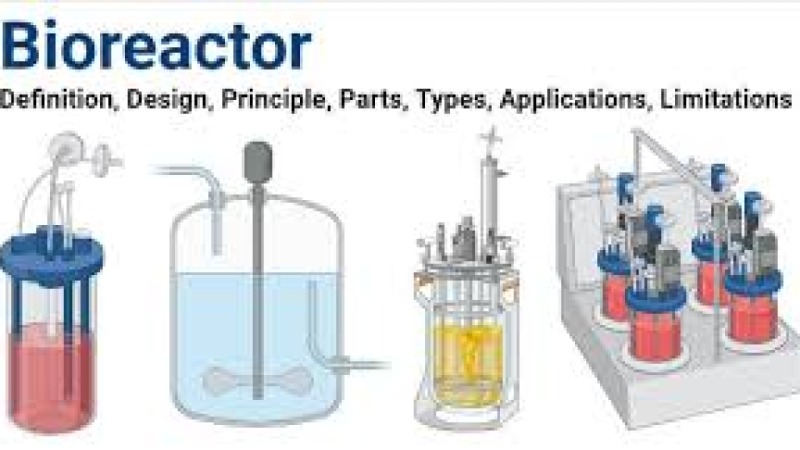
Advanced Bioreactor Design and Operation Training Course is essential for professionals navigating the complex world of biopharmaceutical manufacturing and bioprocess engineering. It provides a deep dive into the advanced principles and practical applications of modern bioreactor systems, focusing on techniques for process intensification, optimization, and robust scale-up. Participants will master the critical interplay between bioreactor design, cell kinetics, and advanced process control to achieve superior product quality and yield. This expertise is crucial for meeting stringent Good Manufacturing Practice (GMP) and regulatory compliance standards in a rapidly evolving, high-stakes industry.
The curriculum is specifically engineered to address the trending challenges in biomanufacturing, including the adoption of single-use bioreactors (SUBs), implementation of Process Analytical Technology (PAT), and leveraging data analytics for real-time monitoring. By focusing on fed-batch and perfusion culture strategies, attendees will learn to manage the delicate environmental controls such as mass transfer, shear stress, dissolved oxygen (DO), and Ph that are vital for cultivating sensitive mammalian and microbial cell lines. The knowledge gained will directly enhance the efficiency, consistency, and economic feasibility of upstream processing, preparing participants to lead bioprocess development and validation projects.
Course Duration
10 days
Course Objectives
- Master the principles of bioreactor scale-up and scale-down modeling.
- Design and validate systems for Good Manufacturing Practice (GMP) compliance.
- Implement and optimize Process Analytical Technology (PAT) for real-time control.
- Evaluate the performance and limitations of single-use bioreactors (SUBs) versus stainless steel.
- Develop and fine-tune advanced fed-batch and perfusion culture strategies.
- Apply core mass transfer and fluid dynamics principles to optimize gas exchange.
- Analyze and model cell growth kinetics for diverse cell lines
- Program and troubleshoot automated control loops for critical process parameters
- Utilize data analytics and predictive modeling for process optimization.
- Formulate robust media and feed strategies based on cell metabolism.
- Minimize shear stress effects in agitated systems for fragile cells.
- Ensure complete aseptic processing and contamination control protocols.
- Conduct comprehensive bioreactor characterization and performance qualification.
Target Audience
- Bioprocess Engineers and Process Development Scientists
- R&D Researchers.
- Manufacturing Supervisors and Operators in Upstream Processing (USP).
- Quality Assurance (QA) and Validation Specialists.
- Automation and Control Engineers.
- Biotechnology Consultants and Project Managers.
- Supply Chain Professionals.
- Post-graduate Students in Biochemical Engineering or Bioprocess Technology.
Course Modules
Module 1: Bioreactor Engineering Fundamentals
- Core principles of gas-liquid and liquid-liquid mass transfer.
- Impeller selection, mixing, and power consumption calculations.
- Fluid dynamics and the role of baffles and spargers.
- Sterilization-in-Place (SIP) and Cleaning-in-Place (CIP) protocols.
- Case Study: Optimizing sparger design to maximize OTR for high-density microbial fermentation.
Module 2: Advanced Control Strategies and Automation
- Tuning of PID controllers for pH, DO, and temperature.
- Advanced control loops: cascading and feed-forward control.
- Supervisory Control and Data Acquisition (SCADA) systems and Data Integrity.
- Integrating sensors and actuators in an automated environment.
- Case Study: Troubleshooting a DO control oscillation issue and re-tuning the PID controller to stabilize a fragile cell culture.
Module 3: Cell and Microbial Kinetics in Bioreactors
- Detailed growth kinetics models
- Understanding and measuring metabolic flux and byproduct formation.
- Modeling and predicting cell viability and death rates.
- Impact of shear stress on cell lines
- Case Study: Using a metabolic model to identify the rate-limiting nutrient in a high-titer antibody process.
Module 4: Fed-Batch Culture Optimization
- Strategies for nutrient-limited feeding and managing inhibitory byproducts.
- Different feeding strategies.
- Maximizing Volumetric Productivity and final product titer.
- Process monitoring via exhaust gas analysis
- Case Study: Designing an optimal feed profile for a high-cell-density Pichia expression system to prevent methanol toxicity.
Module 5: Perfusion Bioreactor Technology
- Principles of continuous and perfusion culture.
- Overview of Cell Retention Devices
- Achieving extremely high cell densities and managing media flow.
- Advantages and challenges for Process Intensification.
- Case Study: Selecting and validating a TFF system for continuous mAb production and defining steady-state parameters.
Module 6: Single-Use Systems (SUS) and Flexibility
- Design and material science of Single-Use Bioreactors (SUBs).
- Extractables and Leachables (E&L) studies and regulatory expectations.
- Supply chain and logistics for disposable systems.
- Hybrid facilities.
- Case Study: Performing a risk assessment for an E&L profile of a new plastic component in a single-use bag.
Module 7: Process Analytical Technology (PAT) Implementation
- In-line, at-line, and off-line analytical methods.
- Application of Raman and Near-Infrared (NIR) spectroscopy for media analysis.
- Soft sensors and predictive modeling using data.
- Integrating PAT with automated control for Quality by Design (QbD).
- Case Study: Implementing a Raman probe to measure real-time glucose and lactate levels and triggering an automated feed adjustment.
Module 8: Scale-Up and Technology Transfer
- Identifying critical scale-up parameters
- Developing scientifically sound scale-down models (SDMs).
- Strategies for successful technology transfer between facilities.
- Impact of large scale hydrodynamics on cell health.
- Case Study: Comparing performance runs between a 10L lab-scale model and a 1000L manufacturing bioreactor, adjusting agitation to maintain constant KLΓÇïa.
Module 9: Bioreactor Characterization and Validation
- Developing Installation Qualification (IQ) and Operational Qualification (OQ) protocols.
- Thermal mapping, mixing time, and KLΓÇïa determination.
- Performance Qualification (PQ) runs and acceptance criteria.
- Documentation and GxP requirements for validation.
- Case Study: Documenting the OQ for a new bioreactor by verifying sensor accuracy and agitation homogeneity.
Module 10: Media, Feed, and Exhaust Gas Analysis
- Designing chemically defined and complex media.
- Advanced strategies for nutrient and trace element optimization.
- Using the Respiratory Quotient (RQ) to monitor metabolic shifts.
- Handling gas balancing and mass balance calculations.
- Case Study: Interpreting a drop in the RQ value to detect the metabolic shift from glycolysis to oxidative phosphorylation in a CHO culture.
Module 11: Bioprocess Data Analytics and Predictive Modeling
- Fundamentals of Bioprocess Data Analysis and visualization.
- Implementing Statistical Process Control (SPC) and control charting.
- Introduction to Machine Learning (ML) for process optimization and fault detection.
- Leveraging Big Data from multiple batch records for process understanding.
- Case Study: Developing an ML algorithm to predict the final harvest titer 48 hours in advance based on early-stage process data.
Module 12: Aseptic Processing and Contamination Control
- Designing for sterility assurance in connection points and sampling.
- Microbial contamination detection and rapid response protocols.
- Filter selection and integrity testing
- Role of cleanroom environment and HEPA filtration.
- Case Study: Investigating a mysterious batch contamination event using Root Cause Analysis (RCA) and implementing a corrective and preventive action (CAPA).
Module 13: Advanced Impeller and Sparger Designs
- Evaluating different impeller types
- Minimizing hydrodynamic shear stress for shear-sensitive cells.
- Design and application of Airlift and Bubble Column Bioreactors.
- Specialized reactors: Fixed-bed, Wave, and Hollow Fiber systems.
- Case Study: Selecting a low-shear, helical ribbon impeller for a high-viscosity biopolymer fermentation.
Module 14: Downstream Processing (DSP) Integration
- Impact of bioreactor conditions on product quality and ease of harvest.
- Optimizing cell harvest and primary clarification methods.
- Strategies for process closure and integrated continuous bioprocessing.
- Linking USP variability to DSP performance.
- Case Study: Adjusting cell-settling parameters in the bioreactor to improve the efficiency of a subsequent centrifugation step.
Module 15: Regulatory Landscape and Future Trends
- Review of current FDA, EMA, and ICH guidelines for GxP and bioprocessing.
- Bioreactor design for Cell and Gene Therapy (CGT) manufacturing.
- Emerging technologies: 3D Bioprinting and Synthetic Biology applications.
- Economic feasibility and Cost of Goods (COG) analysis.
- Case Study: Analyzing the regulatory submission requirements for a novel bioreactor system used in a Phase 3 clinical trial product.
Training Methodology
The course employs a highly interactive and practical methodology:
- Instructor-Led Lectures.
- Case Study Analysis.
- Interactive Workshops.
- Hands-on Simulations.
- Q&A and Expert Panels.
- Role-Playing.
Register as a group from 3 participants for a Discount
Send us an email: info@datastatresearch.org or call +254724527104
Certification
Upon successful completion of this training, participants will be issued with a globally- recognized certificate.
Tailor-Made Course
We also offer tailor-made courses based on your needs.
Key Notes
a. The participant must be conversant with English.
b. Upon completion of training the participant will be issued with an Authorized Training Certificate
c. Course duration is flexible and the contents can be modified to fit any number of days.
d. The course fee includes facilitation training materials, 2 coffee breaks, buffet lunch and A Certificate upon successful completion of Training.
e. One-year post-training support Consultation and Coaching provided after the course.
f. Payment should be done at least a week before commence of the training, to DATASTAT CONSULTANCY LTD account, as indicated in the invoice so as to enable us prepare better for you.